Open almost any wardrobe and you will find at least one garment that owes its comfortable, body-hugging fit to a single fibre: Lycra. From the leggings you wear to the gym to the jeans that never feel stiff after a long day, Lycra has quietly become one of the most influential materials in modern clothing. Yet most people who wear it every day could not tell you what Lycra actually is, how it is made, or whether it is genuinely good for their skin, their wardrobe, and the planet.
The word itself sounds technical, almost clinical, yet Lycra has become part of everyday vocabulary, used casually by shoppers, tailors, and fitness enthusiasts alike to describe anything that stretches. That familiarity, however, often hides a fair amount of misunderstanding about what the fibre is chemically, how much of it is actually present in a typical garment, and how it compares to newer stretch technologies entering the textile market.
This guide breaks down everything you need to know about Lycra material what the fabric means, how it feels, the styles and garments it appears in, the pros and cons of wearing it, how it blends with other fibres, and whether it is the right choice for summer heat or winter layering. Whether you are a shopper trying to understand a care label, a designer sourcing stretch fabric, or a manufacturer comparing fibre options, this article is written to answer every practical question you might have about Lycra.
1. What Is Lycra? Understanding the Material
Lycra is the registered trademark name for a synthetic elastic fibre known generically as elastane (in Europe and most of the world) or spandex (in North America). It was developed in the late 1950s at DuPont’s research laboratories and later became the property of Invista, a subsidiary of Koch Industries. Chemically, Lycra is built from a long-chain synthetic polymer called polyurethane, engineered specifically to stretch to many times its original length and then snap back to its original shape without sagging or losing form.
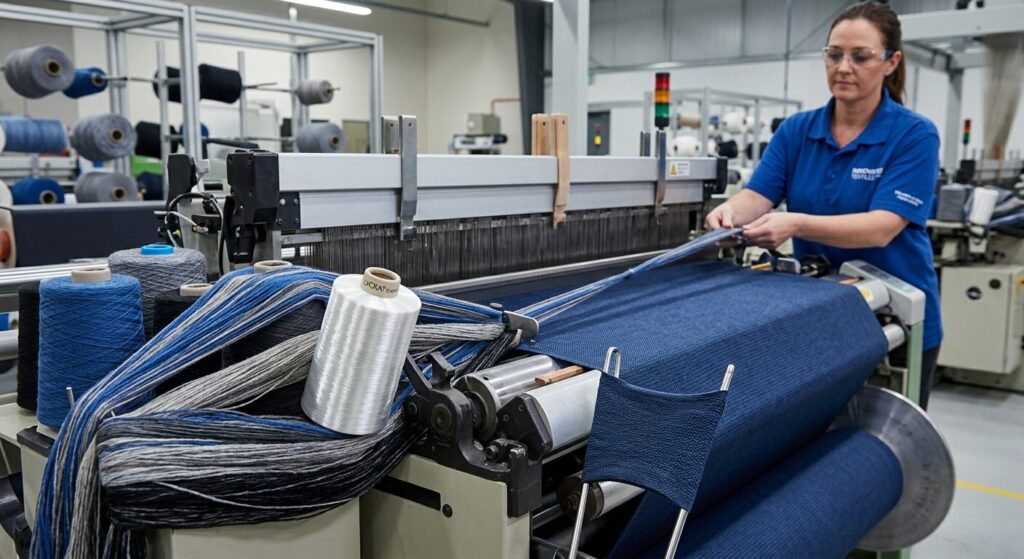
It is important to understand one key point right away: Lycra is almost never used as a fabric on its own. You will not find a garment made of 100% Lycra. Instead, small amounts of Lycra fibre often as little as 2% to 5% are spun together with cotton, polyester, nylon, or wool to create a blended fabric that keeps the look and feel of the base fibre while gaining exceptional stretch and recovery. This is why the term “Lycra material” usually refers to a blended fabric rather than a pure fibre.
Related reading: What Is Elastane? Spandex, Lycra & Stretch Fabric Guide explains the full chemistry and regional naming differences between elastane, spandex, and Lycra in detail.
2. Lycra Fabric Meaning: What Does “Lycra” Actually Refer To?
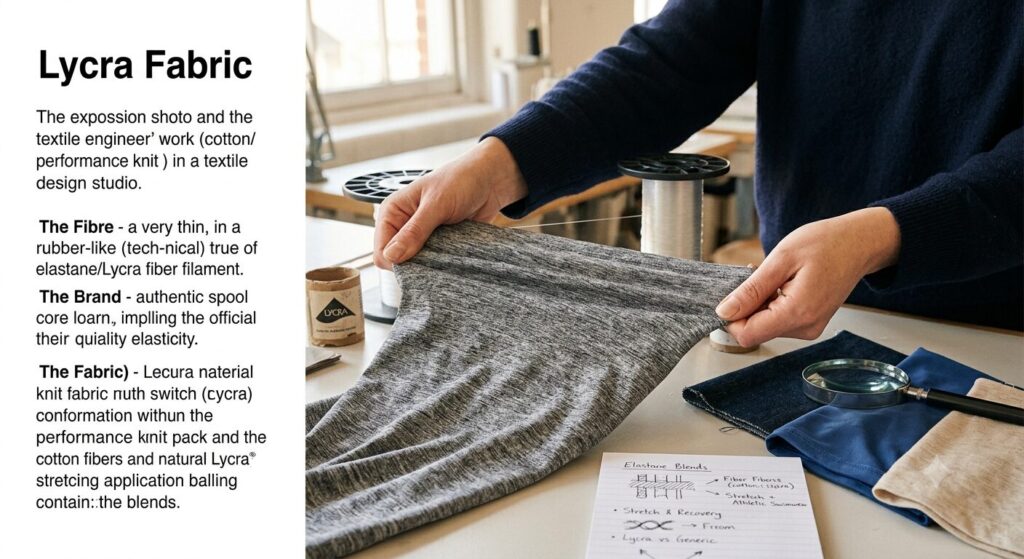
When people ask what “Lycra fabric” means, they are usually asking about one of three things: the fibre itself, the brand name, or the finished stretch textile used in clothing. To clear up the confusion, it helps to separate these meanings clearly.
The Fibre
At the fibre level, Lycra refers to a specific polyurethane-based filament manufactured under Invista’s quality standards. This is different from generic elastane or spandex fibres made by other manufacturers, even though the underlying chemistry is similar.
The Brand
As a brand, Lycra represents a promise of consistent elasticity, recovery, and durability. Because the name became so widely recognised, many consumers use “Lycra” loosely to describe any stretchy fabric, even when the actual elastic fibre inside is a generic, non-branded elastane.
The Fabric
In everyday retail language, “Lycra fabric” usually describes the finished textile a cotton-Lycra jersey, a nylon-Lycra swim fabric, or a denim-Lycra blend rather than the pure fibre. This finished fabric is what actually touches your skin, and its feel depends heavily on which base fibre the Lycra has been blended with.
So, in short: Lycra fabric means a stretch textile constructed by blending a small percentage of polyurethane elastic fibre into a base yarn, giving the final cloth the ability to stretch significantly and return to its original shape.
3. Lycra Fabric Benefits
The popularity of Lycra across fashion, sportswear, and everyday basics is not accidental. A handful of performance properties explain why designers and manufacturers reach for it again and again.
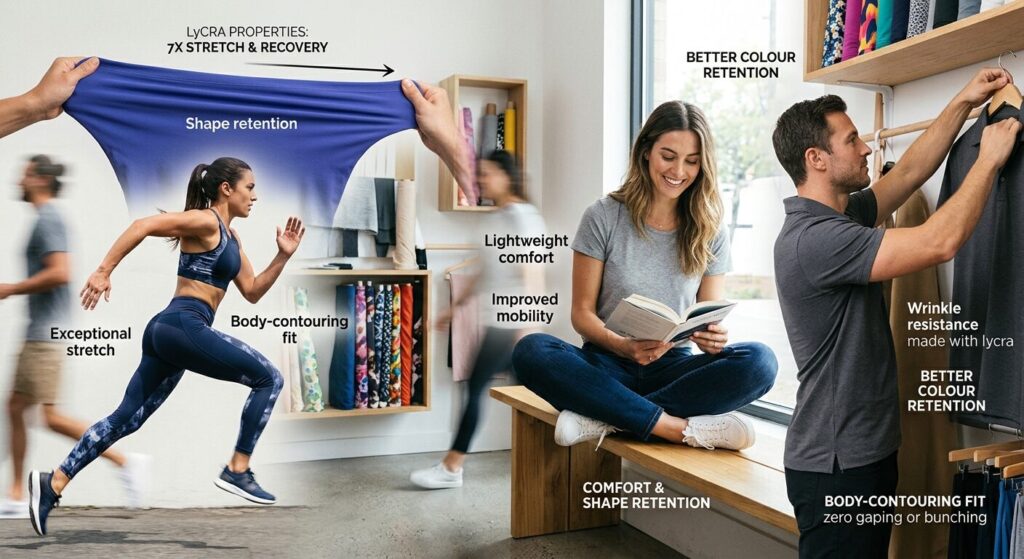
| Benefit | What It Means for the Wearer |
| Exceptional stretch | Fabric can extend 4–7 times its resting length and spring back, allowing unrestricted movement. |
| Shape retention | Garments keep their original silhouette wash after wash instead of sagging or bagging out. |
| Lightweight comfort | Adds elasticity without adding noticeable bulk or weight to the garment. |
| Body-contouring fit | Moulds smoothly to different body shapes, reducing bunching, gaping, or excess fabric. |
| Improved mobility | Reduces resistance against bending, reaching, and stretching movements during daily activity or exercise. |
| Better colour retention | Blended fabrics generally hold dye well, keeping prints and colours vibrant for longer. |
| Wrinkle resistance | Stretch fabrics recover from creasing more easily than many rigid woven fabrics. |
These properties combine to deliver a simple, tangible benefit for the wearer: clothes that feel like they move with the body rather than against it. This is precisely why Lycra fabric benefits are most noticeable in garments designed for activity, fit, or long hours of wear.
4. Lycra Fabric Clothes: Where You Will Find It
Lycra blends appear across a surprisingly wide range of clothing categories. Below is an overview of the most common garment types built around Lycra fabric.
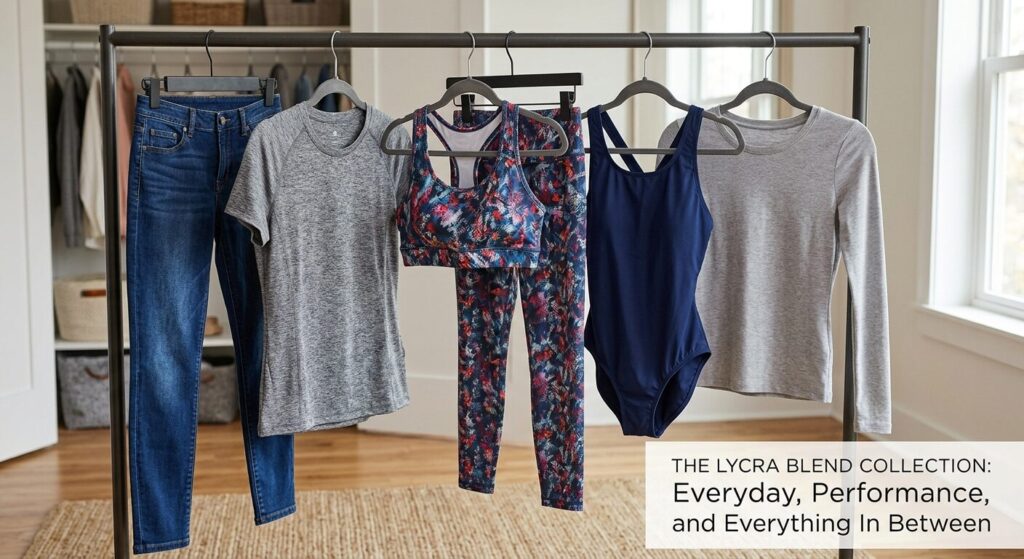
- Activewear and gym clothing: leggings, sports bras, cycling shorts, and compression tops rely on Lycra for stretch and muscle support.
- Swimwear: swimsuits and trunks use Lycra blended with nylon or polyester for a snug, body-hugging, quick-drying fit.
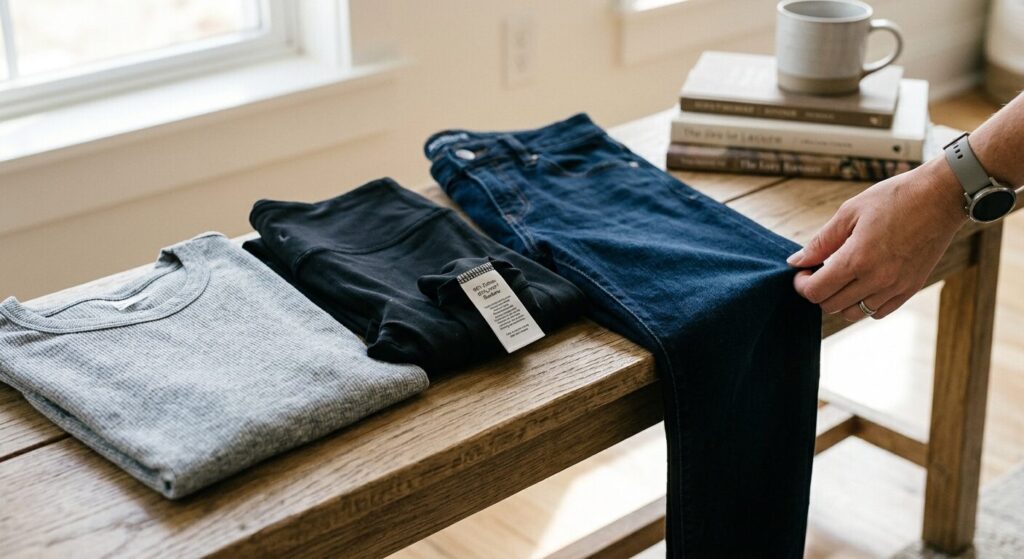
- Denim: skinny jeans and stretch denim use a small percentage of Lycra (often 1–3%) to add comfort stretch while keeping the classic denim look.
- Hosiery and shapewear: tights, stockings, and shaping undergarments depend on Lycra for a smooth, sculpting fit.
- Dancewear and performance costumes: leotards, unitards, and stage costumes use high-Lycra-content fabric for full range of motion.
- Everyday knitwear: T-shirts, fitted tops, and casual dresses often include a touch of Lycra to prevent sagging at the knees, elbows, and seat.
- Medical and compression garments: support stockings and post-surgical compression sleeves use calibrated Lycra content for therapeutic pressure.
Across nearly all of these categories, the actual Lycra content is small. A cotton T-shirt might contain just 2–5% Lycra, while a competitive swimsuit might use 15–20%. The percentage is chosen based on how much stretch and recovery the garment realistically needs.
5. Lycra Material Styles: How the Fabric Shows Up in Fashion
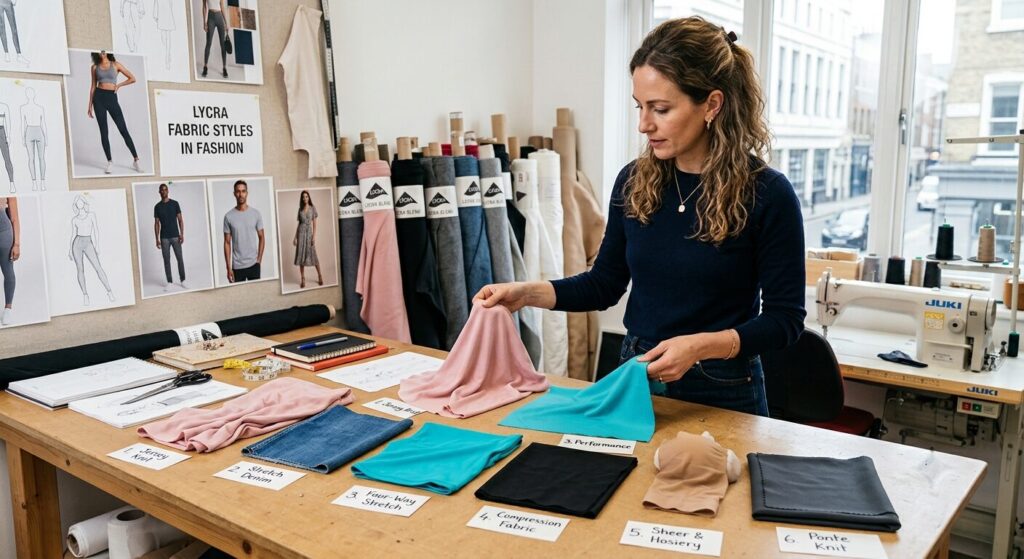
Lycra is not a single, uniform fabric it is incorporated into many different textile styles, each suited to a different look and function.
Jersey Knit with Lycra
A soft, stretchy knit commonly used for T-shirts, casual dresses, and loungewear. It drapes well and moves comfortably against the body.
Stretch Denim
A woven cotton fabric with a small Lycra content, giving jeans a comfort stretch that recovers after sitting or bending, without looking any different from traditional denim.
Four-Way Stretch Performance Fabric
Used in activewear and swimwear, this style stretches both horizontally and vertically, allowing full range of motion in every direction.
Compression Fabric
A tightly knitted, high-Lycra-content fabric engineered to apply graduated pressure, used in shapewear, medical compression garments, and athletic recovery wear.
Sheer and Hosiery-Weight Fabric
Extremely fine Lycra-blended filaments create the sheer, smooth finish seen in tights, stockings, and lightweight bodysuits.
Ponte and Structured Knitwear
A denser, more structured double-knit fabric that holds its shape well, popular for fitted trousers, blazers, and tailored dresses that still need some give.
Each of these styles uses a different Lycra percentage and knitting or weaving technique, which is why one Lycra garment can feel completely different from another, depending on its intended purpose.
6. Lycra Blend Fabric: How It Is Combined With Other Fibres
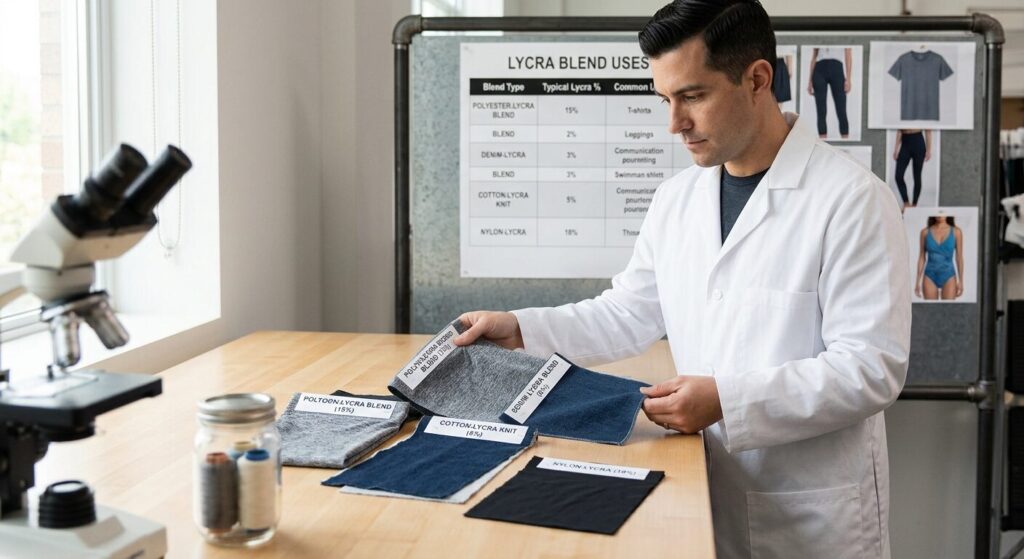
Because pure Lycra is rarely worn on its own, understanding how it blends with other fibres is essential to understanding the fabric itself. Manufacturers typically use one of two construction methods: bare yarn plating, where a fine Lycra filament is knitted directly alongside the main fibre, or core-spun yarn, where the Lycra sits at the centre of the yarn and is wrapped by the primary fibre. Both methods protect the delicate Lycra strand while letting the outer fibre define the fabric’s look, feel, and breathability.
| Blend Type | Typical Lycra % | Common Use |
| Cotton-Lycra | 2–8% | T-shirts, casual wear, leggings |
| Polyester-Lycra | 10–20% | Activewear, sportswear, swimwear |
| Nylon-Lycra | 15–20% | Swimwear, hosiery, dancewear |
| Denim-Lycra | 1–3% | Stretch jeans and trousers |
| Wool-Lycra | 3–6% | Tailored trousers, structured knitwear |
The choice of blend partner fibre matters just as much as the Lycra content itself. Cotton-Lycra blends prioritise breathability and softness against the skin, while polyester-Lycra and nylon-Lycra blends prioritise moisture-wicking, quick-drying performance for sport and swimwear. This is why a Lycra blend fabric label should always be read alongside the percentage and the base fibre, not the word “Lycra” alone.
7. Is Lycra Fabric Good or Bad?
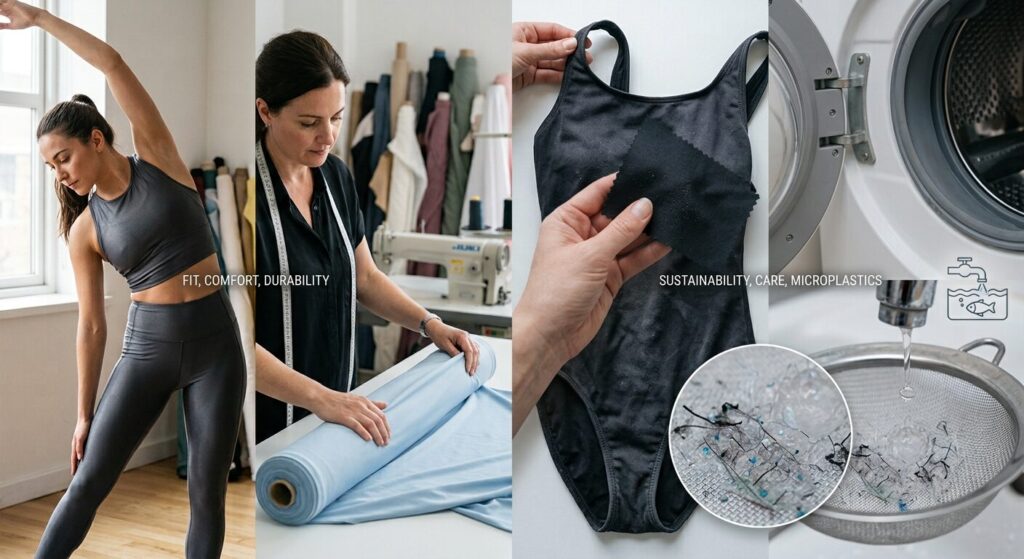
This is one of the most common questions shoppers ask, and the honest answer is that Lycra is neither purely good nor purely bad it is a trade-off, nor the right verdict depends on the use case, the blend ratio, and how the garment is cared for.
The Case for Lycra
- Delivers comfort and fit that rigid fabrics cannot match, especially for activewear, swimwear, and shapewear.
- Extends the usable life of a garment by helping it keep its shape wash after wash.
- Requires only a small percentage in a blend to deliver a noticeable performance improvement.
- Works well with almost any base fibre, from cotton to wool to synthetic performance yarns.
The Case against Lycra
- It is a synthetic, petroleum-derived fibre, which raises sustainability concerns compared to fully natural fabrics.
- It is sensitive to heat, chlorine, and certain chemicals, and can degrade if washed or dried incorrectly.
- Blended fabrics can shed microplastics during washing, a concern for waterways and marine life.
- Poor-quality or overused Lycra blends can lose elasticity over time, leading to sagging or a loose fit.
In practice, most of the concerns around Lycra come down to garment care and fabric quality rather than the fibre itself being inherently unsafe or harmful to wear. Lycra is not known to cause skin irritation for most people, and reputable brands test their blends for safety and durability. The more relevant question for most shoppers is not “is Lycra good or bad” in an absolute sense, but whether the specific garment, blend ratio, and brand meet their comfort, durability, and sustainability expectations.
8. Is Lycra Fabric Good for Summer or Winter?
Lycra itself does not have strong inherent insulating or cooling properties its job is to add stretch, not to regulate temperature. That means the seasonal suitability of a Lycra garment depends almost entirely on the base fibre it is blended with, and on how much Lycra the fabric contains.
Lycra in Summer
Cotton-Lycra and lightweight polyester-Lycra blends with a low Lycra percentage (around 2–5%) tend to work well in warm weather, since the base fibre still allows for airflow and moisture absorption while the Lycra keeps the garment comfortably fitted rather than clingy. Lightweight Lycra swimwear and activewear blends are also engineered with moisture-wicking finishes that help manage sweat during hot-weather workouts.
Lycra in Winter
Denser Lycra blends, such as ponte knits, wool-Lycra trousers, or heavier compression base layers, are well suited to cooler months because the higher fabric weight and tighter knit structure trap warmth close to the body while the Lycra content maintains a close, insulating fit under layers.
The practical takeaway is that Lycra can be appropriate for both summer and winter wear the deciding factor is the base fibre, fabric weight, and knit density, not the Lycra content itself. A lightweight cotton-Lycra tee suits summer, while a heavier wool-Lycra or fleece-backed Lycra legging suits winter layering.
9. Caring for Lycra Fabric
Because Lycra is heat- and chemical-sensitive, correct care significantly extends the life of any garment that contains it.
- Wash in cool or lukewarm water, ideally below 30–40°C.
- Avoid high-heat tumble drying; air-dry Lycra garments flat or on a low, gentle setting.
- Avoid chlorine bleach and harsh detergents, which weaken the polyurethane fibre over time.
- Rinse swimwear promptly after pool or ocean use to reduce chlorine and salt exposure.
- Avoid excessive wringing or twisting, which can distort the fabric’s stretch recovery.
Following these steps keeps the elastic recovery of the fabric intact for much longer, preserving both fit and appearance.
10. Tips for Buying Lycra Garments
Not every garment labelled “stretch” or “Lycra” performs the same way. A few practical checks help you choose a Lycra fabric that will hold up over time.
- Check the fibre content label for the exact Lycra percentage, not just the word “stretch.” Higher percentages generally mean stronger recovery for activewear and swimwear.
- Stretch the fabric gently in-store and watch how quickly it returns to shape slow or incomplete recovery is a sign of lower-quality elastane.
- For swimwear, look for chlorine-resistant Lycra variants if you plan to swim in treated pools regularly, since standard elastane degrades faster under repeated chlorine exposure.
- For everyday basics like T-shirts and leggings, a cotton or polyester blend with 3–8% Lycra usually offers the best balance of comfort, breathability, and shape retention.
- Always follow the specific wash and dry instructions on the care label rather than treating all Lycra garments the same way, since the base fibre also affects the ideal care routine.
These small checks matter because the performance of a Lycra fabric is only as good as the quality of the yarn, the knitting or weaving technique, and the finishing process used by the manufacturer not the presence of the word “Lycra” on the label alone.
11. Frequently Asked Questions About Lycra
Is Lycra the same as spandex or elastane?
Yes, in terms of chemistry. Lycra is a branded version of the same synthetic elastic fibre known generically as spandex in North America and elastane elsewhere. Not all elastane is Lycra, but all Lycra is a form of elastane.
Does Lycra fabric cause skin irritation?
Lycra itself is not a common irritant, and it is widely used in intimate apparel and swimwear. Sensitivity issues are more often related to dyes, finishes, or the base fibre it is blended with, rather than the Lycra fibre itself.
Is Lycra fabric breathable?
Breathability depends mainly on the base fibre in the blend. Cotton-Lycra blends breathe reasonably well, while high-Lycra synthetic blends may feel warmer unless engineered with moisture-wicking or open-knit construction.
Can Lycra fabric shrink?
Lycra fibre itself resists shrinking, but the base fibre it is blended with particularly cotton can shrink if washed or dried at high temperatures. Following the care label prevents this.
How much Lycra should a good stretch garment contain?
This depends on the garment. Everyday T-shirts and jeans typically need only 2–5% Lycra for comfort stretch, while swimwear and performance activewear often use 15–20% for full-range compression and recovery.
Is Lycra environmentally friendly?
Lycra is a petroleum-derived synthetic fibre, so it is not considered eco-friendly in the same way natural fibres are. However, because it extends garment lifespan through better shape retention, it can indirectly reduce the frequency of replacement purchases.
12. How Lycra Fabric Is Made
Understanding the manufacturing process behind Lycra helps explain why it behaves so differently from ordinary fibres. Lycra fibre begins as a liquid polyurethane solution, which is extruded through fine spinnerets to form continuous elastic filaments. These filaments are then either used directly as bare yarn or combined with other fibres before knitting or weaving into fabric.
Bare Yarn Knitting
In this method, the fine Lycra filament is fed into a knitting machine alongside the main yarn, such as cotton or polyester, so both fibres form the fabric structure together. This is the most common approach for jersey knit T-shirts, leggings, and everyday stretch basics, because it is cost-effective and produces a soft, flexible hand-feel.
Core-Spun Yarn
For more demanding applications like denim or structured knitwear, the Lycra filament is placed at the centre of a yarn and wrapped, or “covered,” by the base fibre. This protects the delicate elastic core from friction and chemical exposure, while letting the outer fibre determine the fabric’s surface texture and appearance.
Covered and Corespun Variants for Wovens
Woven fabrics, such as stretch denim or woven trousers, typically require covered yarns, where one or two strands of the base fibre are wound helically around the Lycra core. This construction gives woven fabric the comfort stretch it needs without compromising the crisp, structured look expected of woven cloth.
The manufacturing method chosen has a direct impact on how the finished Lycra fabric feels, how much stretch it offers, and how well it survives repeated washing which is why two garments both labelled “Lycra” can feel remarkably different depending on their construction.
13. Lycra Compared to Other Stretch Materials
Lycra is not the only stretch solution on the market. Comparing it against alternatives helps clarify where it fits within the broader landscape of elastic and performance fibres.
| Material | Stretch Source | Typical Feel | Best Suited For |
| Lycra / Elastane Blend | Polyurethane fibre blended in | Soft, close-fitting, high recovery | Activewear, swimwear, denim, hosiery |
| 100% Cotton | None (rigid woven/knit structure) | Breathable but limited stretch | Casual basics, non-fitted garments |
| Mechanical Stretch Yarn (e.g., bicomponent) | Fibre crimp/structure, no elastane | Stretch with a more “natural” recovery curve | Denim, trousers seeking stretch without elastane |
| Rubber Thread | Natural or synthetic rubber core | Higher bulk, less refined hand-feel | Waistbands, older-generation elastic garments |
Newer bicomponent and mechanical stretch yarns have emerged as elastane-free alternatives, appealing to brands that want stretch performance without a polyurethane component. These technologies use fibre engineering rather than an added elastic fibre to create recovery, which can offer advantages in recyclability and chemical resistance, though the stretch percentage and feel differ from a true Lycra blend.
Conclusion: Should You Choose Lycra Fabric?
Lycra has earned its place in modern wardrobes because it solves a problem no other fibre solves as efficiently: adding meaningful stretch and shape recovery using only a small percentage of fibre content. Whether it appears in your gym leggings, your favourite jeans, your swimsuit, or your winter base layers, Lycra fabric is doing quiet, structural work behind the scenes to keep clothing comfortable, fitted, and long-lasting.
Like any material, it comes with trade-offs sensitivity to heat and chemicals, a synthetic origin, and a dependence on the base fibre for its overall feel and seasonal suitability. Understanding these trade-offs, rather than treating Lycra as simply “good” or “bad,” is the most useful way to decide which Lycra blend fabric is right for your next purchase or product line.
For a deeper dive into the fibre chemistry behind Lycra, read What Is Elastane? Spandex, Lycra & Stretch Fabric Guide. To understand where Lycra fits within DuPont’s broader textile legacy, see DuPont Textile: Where Nylon, Lycra & Sorona Live Today. And if you are comparing Lycra to modern bicomponent stretch yarn alternatives, explore Mestre vs Lycra: T-800, T-400 Stretch Yarn Comparison.