

South America’s textile landscape is shaped by contrast and ambition. Brazil hosts the fourth-largest apparel market in the world, driven by a domestic consumer culture that prizes close-fitting, comfortable, and stylish clothing. Colombia’s Medellin has built an internationally recognised denim and fashion manufacturing cluster that exports to over 80 countries. Peru’s textile sector combines a heritage in natural fibres with growing synthetic processing capability. Argentina and Chile add premium and sustainability-focused retail dimensions to a continent that is simultaneously manufacturing, exporting, and consuming at increasing sophistication.
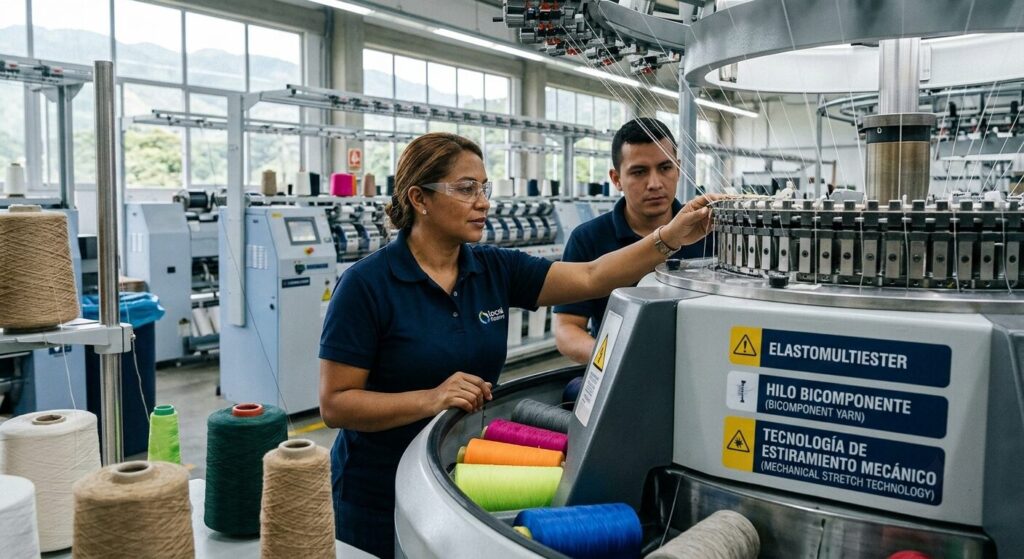
The question running through South America’s textile industry right now is what comes after conventional elastane and what performance fibres can do for product differentiation and export competitiveness. Bicomponent yarn, elastomultiester, and mechanical stretch technology are the three answers most relevant to the continent’s current stage of development.
Bicomponent Yarn in South American Textile Manufacturing
Colombia’s denim manufacturing cluster concentrated in Medellin’s fashion district and industrial parks is arguably the most technically sophisticated apparel production hub in South America. Colombian denim manufacturers working with international brands from Europe, North America, and Asia have progressively upgraded their technical yarn inputs, and bicomponent polyester yarn is the next step for mills looking to move from standard elastane-based stretch to a more durable and recyclable alternative. The side-by-side self-crimping bicomponent structure that underpins elastomultiester delivers the precise, controlled elongation and recovery that Colombian denim’s reputation for fit quality depends on.
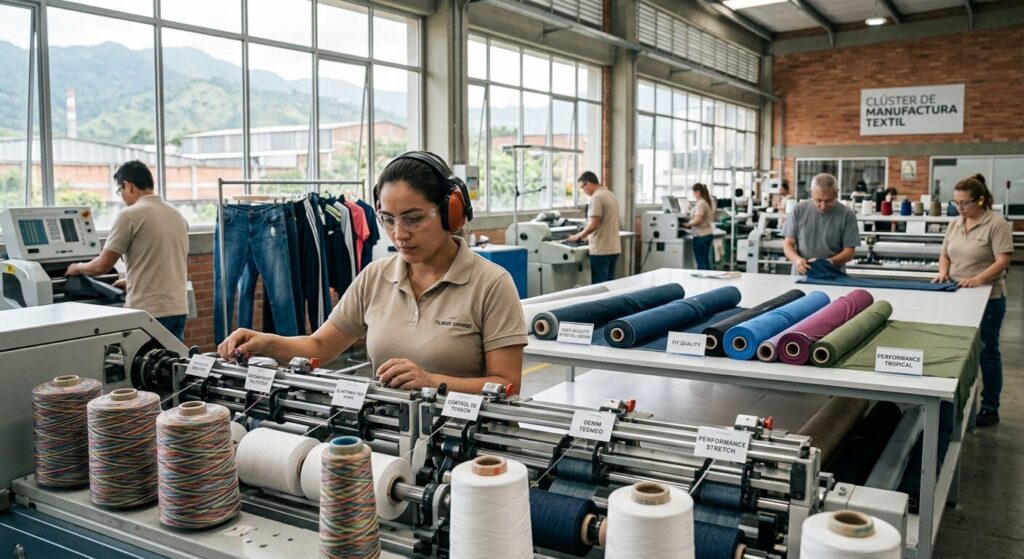
Brazil’s large synthetic fibre processing sector which includes major polyester texturising and weaving operations in Sao Paulo state and the southern textile corridor provides a natural entry point for bicomponent yarn. Brazilian sportswear brands and the country’s growing athleisure market create demand for stretch fabrics that perform across tropical-climate conditions, and bicomponent self-crimping polyester’s resistance to heat and UV degradation directly addresses the performance gap that conventional elastane shows in Brazil’s warm, humid coastal cities.
Peru’s textile sector, which has historically focused on natural fibre excellence in Pima cotton and alpaca, is beginning to develop synthetic blend capability in response to growing demand for performance stretch fabrics. Bicomponent yarn offers Peruvian manufacturers a technically differentiated entry point into the synthetic stretch category producing inherent stretch fabrics without full dependency on imported elastane and positions Peru’s mills for export into markets that increasingly specify more recyclable fibre constructions.
Elastomultiester in South American Textile Markets
Colombia is where elastomultiester has the clearest and most immediate commercial application in South America. The iconic Colombian fit the style of jeans known globally for its precise contouring, defined back-pocket placement, and exceptional comfort stretch depends on stretch yarn performance that holds its recovery across hundreds of wearing and washing cycles. As Colombian manufacturers increase their export volume to European and North American markets where sustainability credentials are now buyer requirements, the recyclability advantage of elastomultiester over elastane becomes commercially decisive: European fashion buyers under the EU-Colombia Trade Agreement are already requiring sustainability documentation from their Colombian supply partners.
Brazil’s corporate and workwear market represents a different but equally significant elastomultiester opportunity. Serving the country’s large financial sector, healthcare system, and manufacturing industries, Brazilian uniform suppliers specify fabrics that withstand frequent high-temperature commercial laundering. Conventional elastane degrades at the wash temperatures standard in Brazilian commercial laundries; elastomultiester’s heat-stable coil structure maintains stretch performance across the same laundering cycles that elastane fails, giving Brazilian workwear manufacturers a fibre that eliminates a common source of premature garment failure.
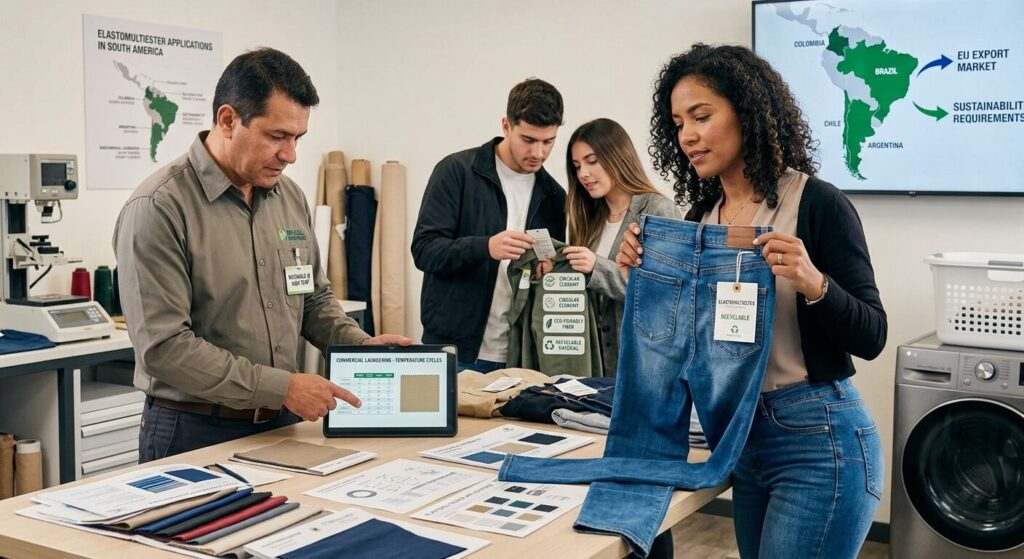
For Argentina and Chile, elastomultiester’s sustainability positioning is its most compelling attribute in the near term. Both countries have growing consumer segments urban, educated, and influenced by European and North American trends that are beginning to ask questions about what their clothing is made of and how it can be recycled at end of life. Brands in these markets that move early to communicate the recyclability advantage of elastomultiester over elastane will reach this growing sustainability-aware consumer segment ahead of the competition.
Mechanical Stretch in South American Climate and Consumer Conditions
Brazil is the continent’s largest consumer of stretch casualwear, driven by a culture that values close fit, freedom of movement, and comfort in tropical conditions. Mechanical stretch fabrics inherently resistant to the heat and UV exposure that dominate most of Brazil’s populated regions align naturally with what Brazilian consumers expect from their everyday clothing. The coil structure of mechanical stretch yarn does not degrade under the same outdoor conditions that cause elastane-blended fabrics to lose shape retention over a Brazilian summer.
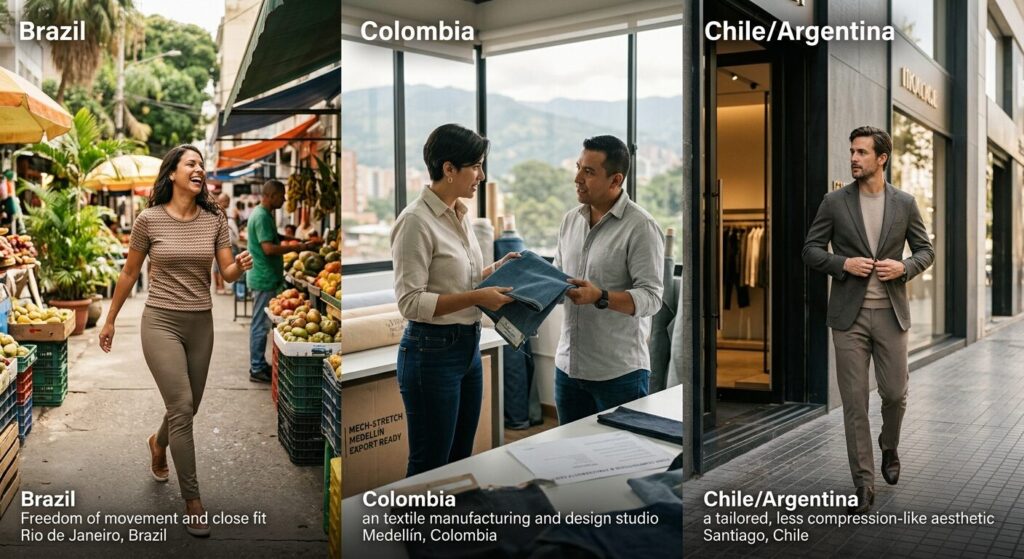
Colombia’s denim export expertise extends beyond stretch jeans into a broader portfolio of stretch casualwear and sportswear. Colombian manufacturers using mechanical stretch yarn particularly bicomponent self-crimping polyester can differentiate their export products to European and North American buyers on both performance and sustainability: inherent stretch without elastane, with full fibre composition documentation that meets the traceability standards export buyers increasingly require from Latin American supply chains.
Chile’s premium retail market and Argentina’s casualwear sector both reflect the broader South American consumer trend toward stretch fabrics that combine comfort with a more tailored, less compression-like aesthetic. Mechanical stretch yarn delivers exactly this: the freedom of stretch within a woven fabric that handles and drapes like a conventional structured material, without the rubbery recovery feel that high-elastane blends can introduce in blazers, dress trousers, and structured casualwear.
Mestre’s Relevance for South American Markets By Madhusudan Group In Surat
India-South America textile trade is a growing bilateral relationship supported by multiple institutional frameworks, and India is already a significant source of polyester yarn for Colombian, Brazilian, and Peruvian manufacturers. Mestre’s bicomponent polyester platform producing elastomultiester and mechanical stretch yarns with full technical documentation is positioned as a technically differentiated export into a South American market actively seeking alternatives to Chinese commodity polyester and imported European elastane.
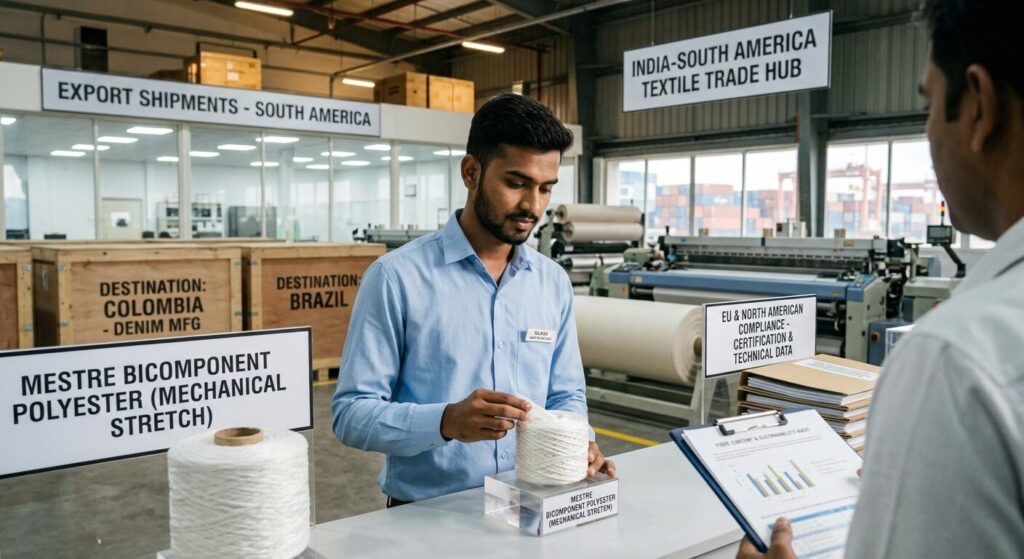
For Colombian denim manufacturers in particular, access to a bicomponent yarn supplier like Mestre, with documentation suitable for EU and North American buyer compliance requirements, provides a direct competitive advantage in export tenders. As South American textile exporters face increasingly detailed fibre content and sustainability audits from international buyers, the technical precision and supply chain transparency of a vertically integrated Indian manufacturer becomes a commercial differentiator rather than a mere sourcing decision.
Frequently Asked Questions
Is elastomultiester relevant for the Colombian denim market?
Yes, very directly. Colombian denim manufacturers are among the most technically sophisticated in South America and face growing sustainability requirements from European and North American buyers. Elastomultiester provides comparable stretch to elastane in denim applications with better recyclability and heat tolerance both increasingly required by Colombian manufacturers’ export customers.
Does Brazil’s tropical climate affect the performance of elastane-based stretch fabrics?
Yes. Brazil’s tropical climate high temperatures, humidity, and UV intensity accelerates elastane’s degradation over time. Mechanical stretch and elastomultiester fabrics, which generate stretch from a physical coil structure rather than an elastane polymer chain, are significantly more resistant to heat and UV breakdown in Brazilian outdoor and casualwear applications.
Is bicomponent polyester compatible with Brazilian synthetic fibre processing equipment?
Yes. Bicomponent polyester yarns including elastomultiester can be processed, dyed, and finished using standard disperse-dye equipment common in Brazilian polyester mills. No specialised equipment beyond what Brazilian mills already operate for standard polyester is required.
How does the EU-Colombia Trade Agreement affect Colombian manufacturers’ yarn choices?
Under the EU-Colombia Trade Agreement, Colombian exporters access the EU market under preferential terms. As European buyers add circular economy and fibre recyclability criteria to sourcing requirements, Colombian manufacturers using elastomultiester which is more recyclable than elastane-blended constructions gain a concrete sustainability compliance advantage in EU market access.
Can Indian bicomponent yarn like Mestre compete on price in South American markets?
Indian polyester yarn, including bicomponent constructions, is generally competitive on a cost-per-performance basis with Chinese-imported commodity polyester and locally produced options in South America. The bicomponent construction adds technical value over standard polyester, so the comparison is performance against price rather than pure commodity pricing.
Final Thoughts
South America’s textile market from Colombia’s world-class denim expertise to Brazil’s enormous domestic scale and Peru’s craft heritage is ready for the next generation of stretch yarn technology. Bicomponent yarn, elastomultiester, and mechanical stretch offer South American manufacturers the tools to differentiate their product, meet growing export buyer sustainability requirements, and serve a domestic consumer base that demands comfort, durability, and value from every garment. Mestre provides a sourcing connection between India’s bicomponent yarn manufacturing capability and South America’s growing demand for performance textile inputs.1