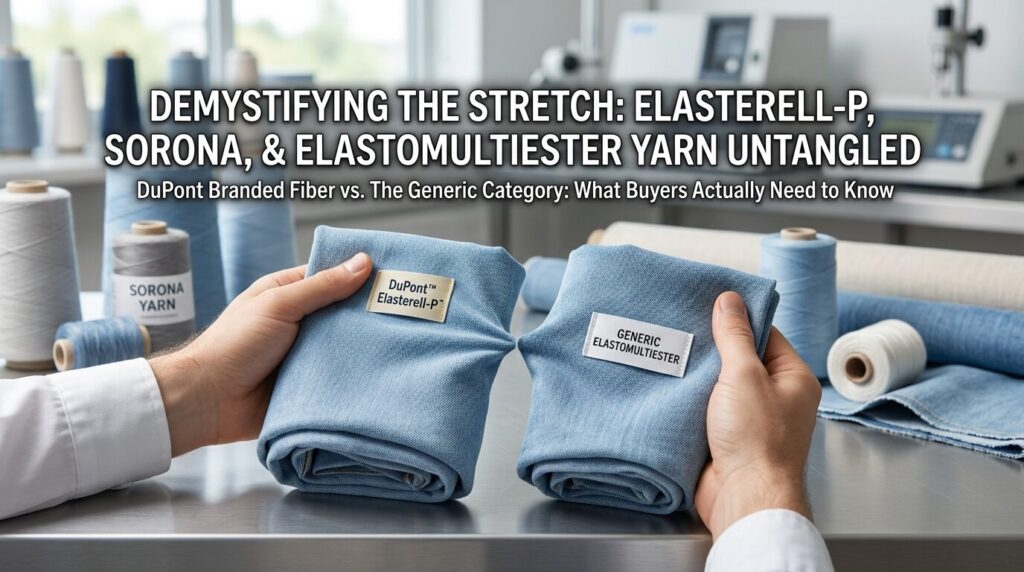
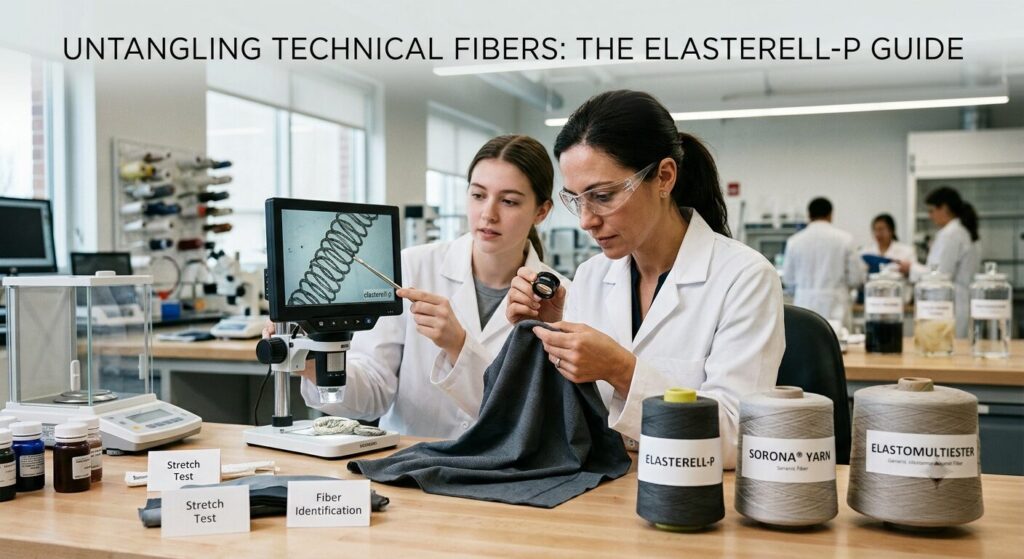
Search for “elasterell,” “elasterell-p” and “sorona yarn” and you’ll land on a tangle of overlapping fiber names that all seem to describe the same thing because, largely, they do. This guide untangles the terminology: what elasterell-p actually is, how it relates to Sorona, and how it compares to the generic fiber category most of the industry calls elastomultiester.
What Is Elasterell-P?

Elasterell-P is DuPont’s proprietary bicomponent polyester fiber one of the original branded examples of the fiber category now generically labeled “elastomultiester” on textile fiber-content labels. It’s built from two polyester-family polymers extruded side by side: standard PET and DuPont’s own PTT polymer (marketed as Sorona), which is partially derived from renewable, plant-based propanediol. The mismatch in how the two polymers shrink as they cool creates a permanent helical crimp the source of the fiber’s stretch, with no elastane involved.
Elasterell-P vs Elastomultiester Is It the Same Thing?
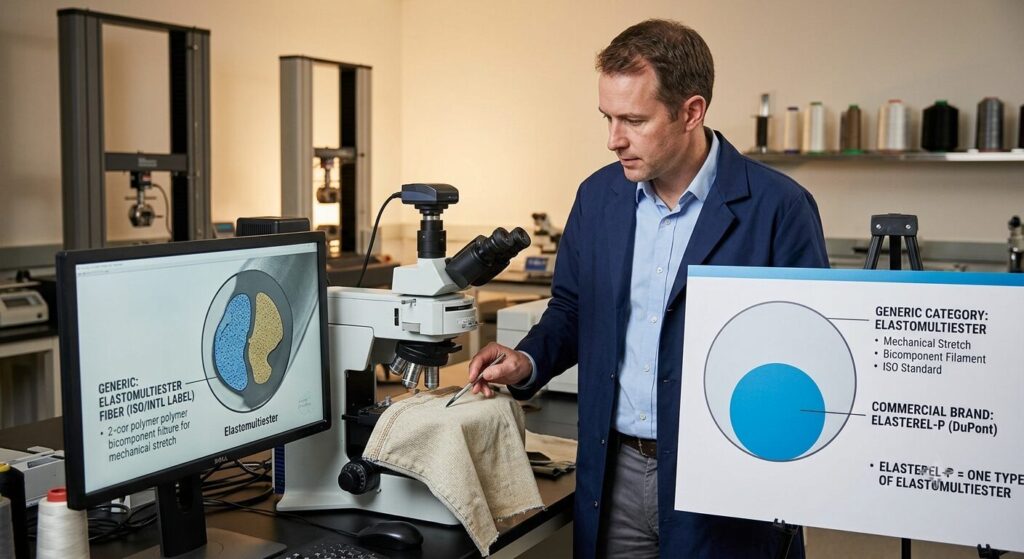
Elasterell-P is DuPont’s own commercial name for its version of the fiber. “Elastomultiester” is the broader, generic category name used in ISO and international fiber-content labeling for any bicomponent, two-polyester-component filament engineered for mechanical stretch. The relationship is the same as “Lycra” (a brand) sitting inside the generic category “elastane/spandex”: every elasterell-p fiber is an elastomultiester, but not every elastomultiester fiber is elasterell-p.
Where Does Sorona Fit In?

Sorona is DuPont’s broader partially bio-based PTT polymer platform. It’s used both inside elasterell-p stretch fiber and, separately, in non-stretch Sorona apparel and carpet fibers marketed under names like Sorona® Agile. Sorona fiber has been certified Class 1 under OEKO-TEX Standard 100 meaning it has passed the strictest tier of textile safety testing, the tier normally reserved for infant and toddler products.
Elasterell-P / Sorona vs Generic Elastomultiester Yarn: What Should Buyers Actually Compare?
| Factor | DuPont Elasterell-P / Sorona | Generic Elastomultiester (e.g. Mestre) |
| Fiber mechanism | Bicomponent PET/PTT, mechanical crimp stretch | Bicomponent polyester, mechanical crimp stretch same principle |
| Bio-based content | Partially plant-based PTT component | Varies by producer and grade confirm per supplier |
| Recyclability | Mechanically recyclable in polyester streams (per DuPont) | Mechanically recyclable in polyester streams when unblended with elastane |
| Supply / sourcing region | Primarily Western/global DuPont supply chain | Regional producers (e.g. India-based) can offer shorter lead times for Asia-Pacific and export manufacturing |
| Certification | OEKO-TEX Class 1 (Sorona fiber) | Confirm OEKO-TEX/REACH status per lot with your supplier |
For buyers, the practical takeaway is that elasterell-p and generic elastomultiester solve the same technical problem spandex-free mechanical stretch in a fully polyester, recyclable construction. The decision between a DuPont-branded fiber and a generic elastomultiester supplier usually comes down to regional supply chain, lead time, minimum order quantities, and price, not a fundamental performance gap.
A Brief Origin of Elasterell-P and Sorona
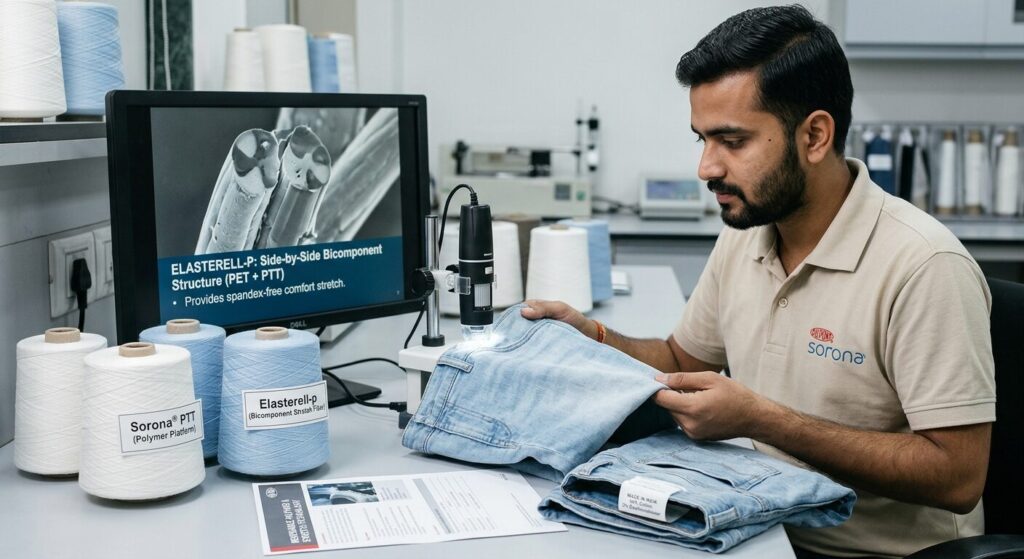
DuPont commercialized its PTT (polytrimethylene terephthalate) polymer platform under the Sorona name in the early 2000s, positioning it as a partially renewable alternative within the polyester family. Elasterell-P followed as the bicomponent stretch-fiber application of that same polymer chemistry, pairing standard PET with Sorona-based PTT in a side-by-side filament structure. The result was one of the first commercially significant spandex-free stretch fibers to reach mainstream apparel and denim manufacturing, predating the wider adoption of the generic “elastomultiester” category name that later appeared on international fiber-content labels.
Performance Characteristics in Real Garments

In finished fabric, elasterell-p and generic elastomultiester both deliver what’s often described as moderate, permanent comfort stretch noticeably less maximum elongation than elastane, but with better recovery consistency over the life of the garment because the stretch mechanism is mechanical rather than chemical. Denim made with either fiber type tends to hold its shape through repeated wear and washing better than a heavily elastane-blended stretch denim, which is one reason both have found a durable niche in workwear and five-pocket denim where garment longevity matters as much as initial comfort.
Sourcing Considerations for Buyers Comparing Branded vs Generic Fiber

For a sourcing manager, the choice between a DuPont-branded fiber and a generic elastomultiester supplier is rarely about a fundamental performance gap the underlying mechanism is the same bicomponent, mechanical-crimp stretch. What typically drives the decision is practical: minimum order quantities, lead times, freight cost to the destination market, and whether the buyer’s brand or retail partner requires a named, traceable fiber brand on the label for marketing purposes. Regional elastomultiester producers can often offer shorter lead times and lower minimums for manufacturers based in or exporting from Asia-Pacific, while DuPont’s branded supply chain may suit buyers who want a globally recognized ingredient-brand story.
Frequently Confused Terms Around Elasterell-P
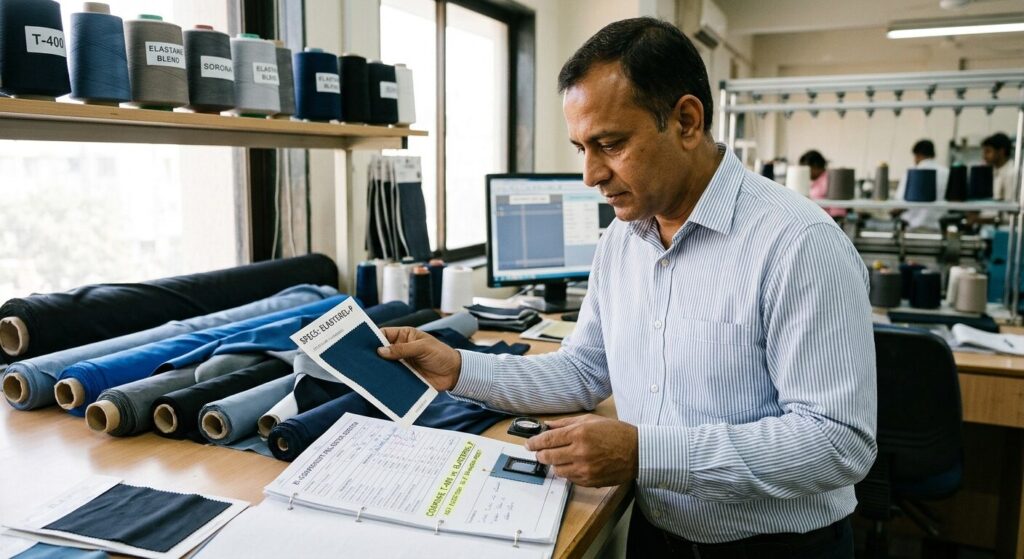
Beyond the elasterell-p/Sorona/elastomultiester triangle, buyers also encounter terms like “T-400” and “T-800,” which are other manufacturers’ brand names for their own bicomponent or elastane-based stretch fibers, not variants of elasterell-p itself. The safest way to compare any of these branded fibers is to ask each supplier directly whether their product is a bicomponent, spandex-free construction (like elasterell-p and generic elastomultiester) or an elastane-blended construction, since the branded name alone doesn’t always make that distinction obvious on a spec sheet.
What to Ask a Supplier When Requesting Elasterell-P or Elastomultiester Yarn
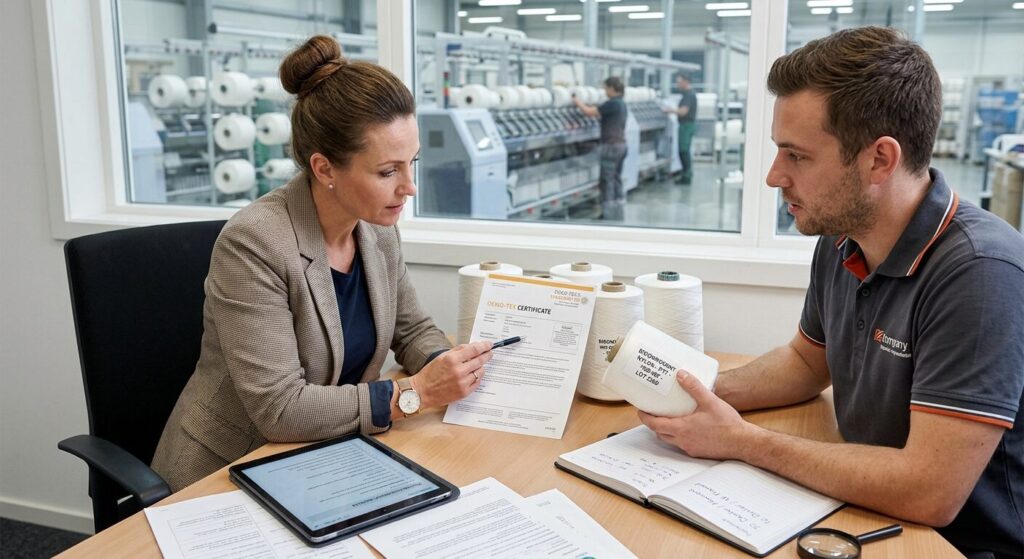
A useful sourcing checklist includes: confirming whether the yarn is genuinely bicomponent (mechanical stretch) rather than elastane-blended; requesting the specific denier, filament count and crimp/stretch percentage for the grade being quoted; asking for current OEKO-TEX or REACH documentation tied to that production lot; and clarifying whether the fiber contains any bio-based PTT content, since that can matter for brands making renewable-content claims. Getting these details in writing before committing to a production run avoids the most common sourcing disputes in this fiber category.
Is Elasterell-P Still Being Used Today?
Yes elasterell-p and Sorona-based fiber remain in active commercial use, particularly in denim and shirting applications where a bicomponent, spandex-free stretch construction is valued for durability and recyclability. It hasn’t been discontinued or superseded; it simply now competes alongside a broader field of generic elastomultiester producers offering the same underlying fiber mechanism under different brand and regional sourcing arrangements.
FAQ For Elasterell-P Explained
Q: Is elasterell-p the same as elastomultiester?
A: Elasterell-P is DuPont’s branded version of the fiber; elastomultiester is the generic category name used on fiber-content labels every elasterell-p fiber is an elastomultiester.
Q: Is Sorona a yarn or a fabric?
A: Neither exactly Sorona is DuPont’s polymer platform, used to make fibers (including elasterell-p stretch fiber), which are then spun into yarn and knitted or woven into fabric.
Q: Is Sorona the same as elastomultiester?
A: Not exactly Sorona is the polymer brand; elasterell-p is the specific stretch fiber DuPont makes from it, which falls under the generic elastomultiester category.