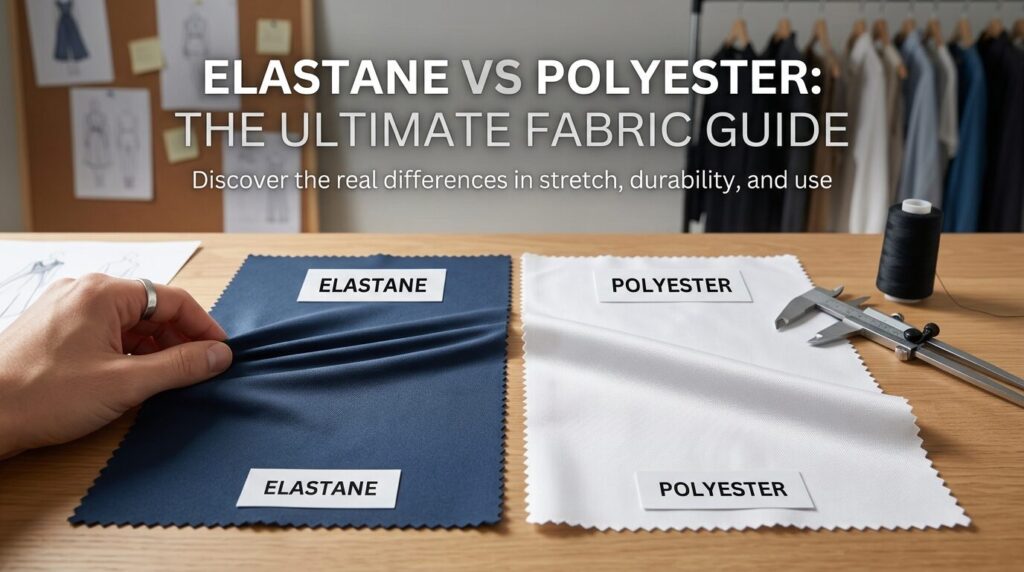
In fabric specs and clothing labels, “elastane” and “polyester” show up together so often that it’s a genuinely common question whether they’re the same thing. They’re not one is a stretch fiber, the other is a structural fiber, and in almost every real garment they’re blended together, not substituted for each other.
The One-Line Answer
Polyester is a durable, moisture-wicking fiber that forms the bulk, or “body,” of a fabric. Elastane also sold under the brand names Spandex and Lycra is a highly elastic fiber added in small percentages, usually 2–8% of total fabric weight, purely to create stretch and recovery. Is elastane the same as polyester? No. Is elastane like polyester in any sense? Only that both are synthetic polymers; their molecular structure and their job inside a garment are essentially opposite.
Elastane vs Polyester: Side-by-Side
| Property | Elastane (Spandex/Lycra) | Polyester |
| Stretch capacity | Very high up to 500% elongation | Minimal on its own |
| Recovery | Excellent when new; degrades with heat, chlorine, UV | Not applicable not an elastic fiber |
| Typical % in fabric | 2–8% | Usually the majority fiber, 65–98% |
| Abrasion durability | Lower; breaks down over repeated wash cycles | High very durable |
| Moisture-wicking | Low | High |
| Recyclability | Difficult even 1% elastane can block mechanical PET recycling | Easily recycled (rPET) when unblended |
| Typical use | Added for stretch: leggings, swimwear, denim, hosiery | Structural fiber: shirting, denim, outerwear, upholstery |
Is Elastane Worse Than Polyester?
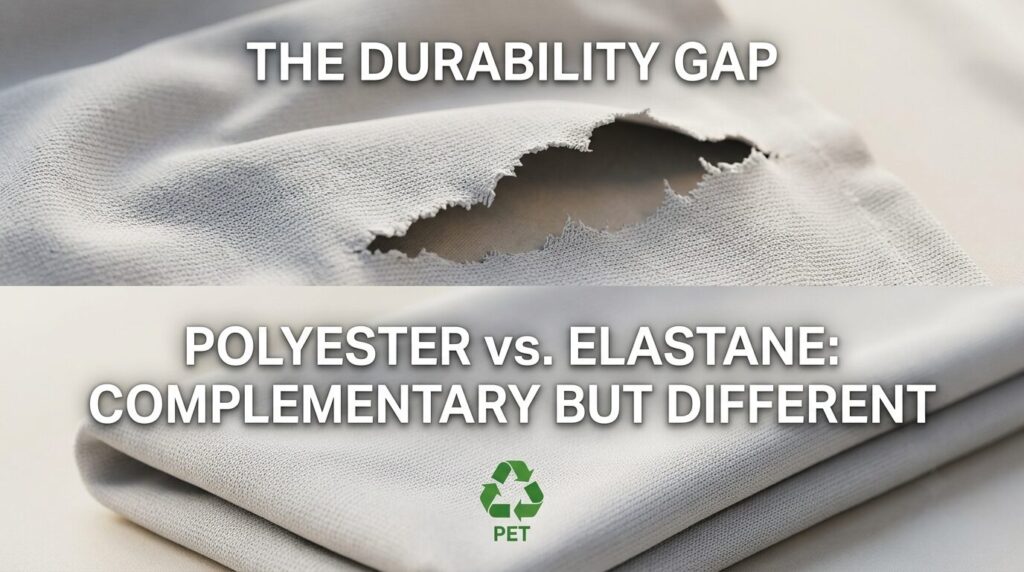
Neither is “worse” they’re not interchangeable, they’re complementary. But there is a real durability and sustainability gap worth knowing: elastane fatigues over time from heat, chlorine and UV exposure, while polyester alone is very durable and, when not blended with elastane, is one of the easiest fibers to recycle at scale.
What Does Polyester + Elastane Fabric Feel Like?
A polyester/elastane blend typically feels smooth, has a slight matte or satin hand-feel depending on finish, and offers four-way stretch meaning it stretches and recovers both lengthwise and widthwise. This is the standard construction behind leggings, stretch denim, athletic shirting and much of modern fitted apparel.
Is There a Way to Get Stretch Without Elastane?
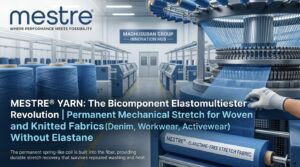
Yes. Bicomponent polyester fibers generically called elastomultiester build a permanent mechanical coil into a 100%-polyester filament during extrusion, delivering comfort stretch without adding a separate elastane strand. Because the resulting fabric stays single-polymer, it avoids the recyclability problem elastane blends create, while still offering meaningful stretch and recovery for shirting, denim, workwear and hosiery.
Elastane vs Spandex vs Polyester Aren’t Elastane and Spandex the Same Thing?
Yes: elastane is the generic fiber name; spandex is the same fiber under its common US name; Lycra is a specific brand of elastane owned by The Lycra Company. Polyester is a completely separate fiber family the comparison isn’t elastane vs spandex, it’s (elastane = spandex) vs polyester.
Why Manufacturers Blend Elastane With Polyester in the First Place
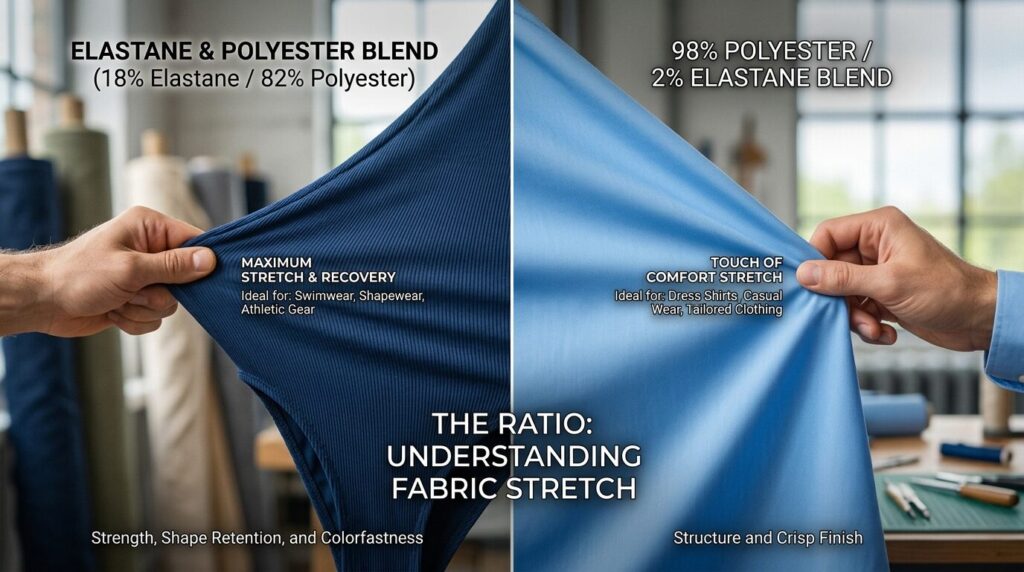
On its own, elastane has poor abrasion resistance, weak color retention under repeated dyeing, and almost no structural strength it can’t hold a garment’s shape by itself. Polyester supplies the strength, shape retention and colorfastness a garment needs, while a small percentage of elastane supplies the give that polyester alone can’t. Blending the two lets manufacturers dial in exactly how much stretch a fabric needs: a dress shirt might use 2-3% elastane for a touch of comfort stretch, while swimwear or shapewear can run 15-20% or higher for maximum recovery. The ratio, not just the presence of elastane, is what determines how a finished fabric behaves.
Environmental and End-of-Life Considerations
The sustainability gap between the two fibers is one of the more consequential differences for buyers thinking beyond the point of sale. Pure polyester garments can generally be mechanically recycled into new polyester fiber at end of life, feeding directly into the growing rPET supply chain. Once even a small percentage of elastane is blended in, most mechanical recycling facilities can’t separate the two polymers economically, and the garment is routed to landfill or, at best, downcycled into non-textile applications. This is a major reason apparel brands under EU circular-economy pressure are actively seeking spandex-free stretch alternatives that keep a garment single-polymer without giving up comfort stretch entirely.
How to Read a Fabric Label for Elastane and Polyester Content
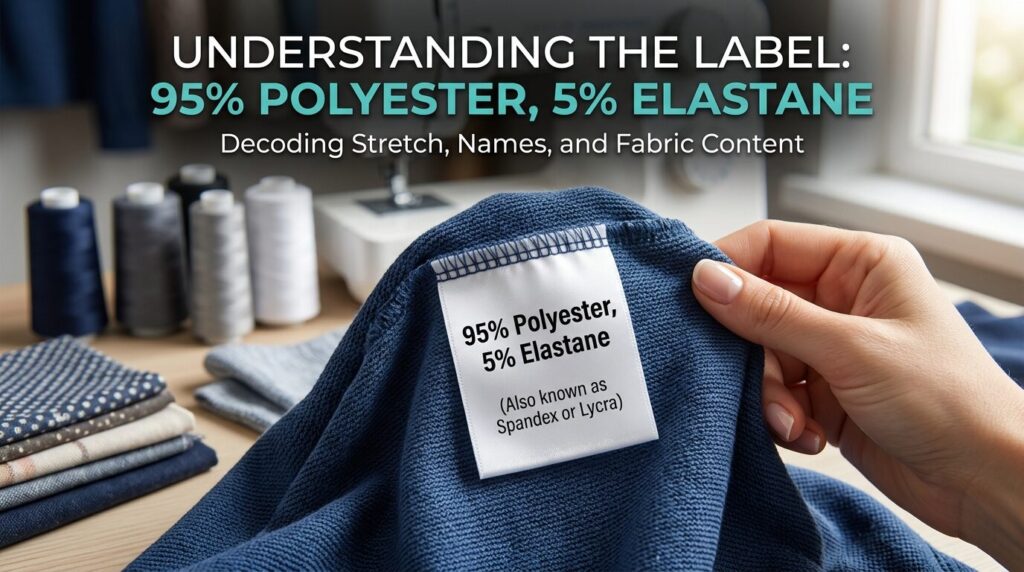
A care label listing “95% polyester, 5% elastane” tells you the fiber blend by weight, not by feel a fabric with only 5% elastane can still feel quite stretchy depending on how it’s knitted or woven. Labels sometimes list elastane under its alternate names: spandex (the US generic term) or a brand name like Lycra, Dorlastan or Creora, all of which refer to the same fiber type under different naming conventions. If a label lists only “polyester” with no elastane, spandex or Lycra content at all, any stretch you feel is coming from the knit structure itself or from a bicomponent fiber like elastomultiester, not from a separate elastic strand.
Common Myths About Elastane and Polyester
A few misconceptions come up often enough to be worth correcting directly. First, elastane and polyester are not the same fiber family and don’t share a melting point, dye affinity or recycling pathway. Second, a higher elastane percentage isn’t automatically “better” most everyday apparel only needs 2-8% for comfortable movement, and higher ratios trade durability and breathability for stretch. Third, “polyester-elastane” isn’t a single hybrid fiber; it’s two separate fibers spun or woven together, which is exactly why they can, in principle, be separated even though in practice that separation is rarely done at commercial recycling scale today.
Choosing Between Elastane and Elastane-Free Stretch for a New Product Line
For brands specifying a new stretch fabric, the practical question usually isn’t “elastane or polyester” it’s how much stretch a product genuinely needs versus how much durability and recyclability matter to the brand’s sustainability commitments. High-performance categories like swimwear, compression wear and shapewear still lean on elastane’s superior elongation. For shirting, denim, hosiery and workwear, where moderate comfort stretch and long garment life matter more than extreme elasticity, a spandex-free bicomponent polyester construction is increasingly the more defensible choice on both durability and end-of-life grounds.
FAQ Elastane vs Polyester
Q: Is elastane the same as polyester?
A: No. Elastane is a highly elastic fiber added in small amounts for stretch; polyester is the durable structural fiber that makes up most of the fabric.
Q: Is elastane worse than polyester?
A: They’re not comparable that way elastane provides stretch polyester can’t, but polyester is far more durable and easier to recycle.
Q: Can you get stretch fabric without elastane?
A: Yes bicomponent polyester (elastomultiester) fibers build mechanical stretch into a 100% polyester filament, avoiding elastane entirely.