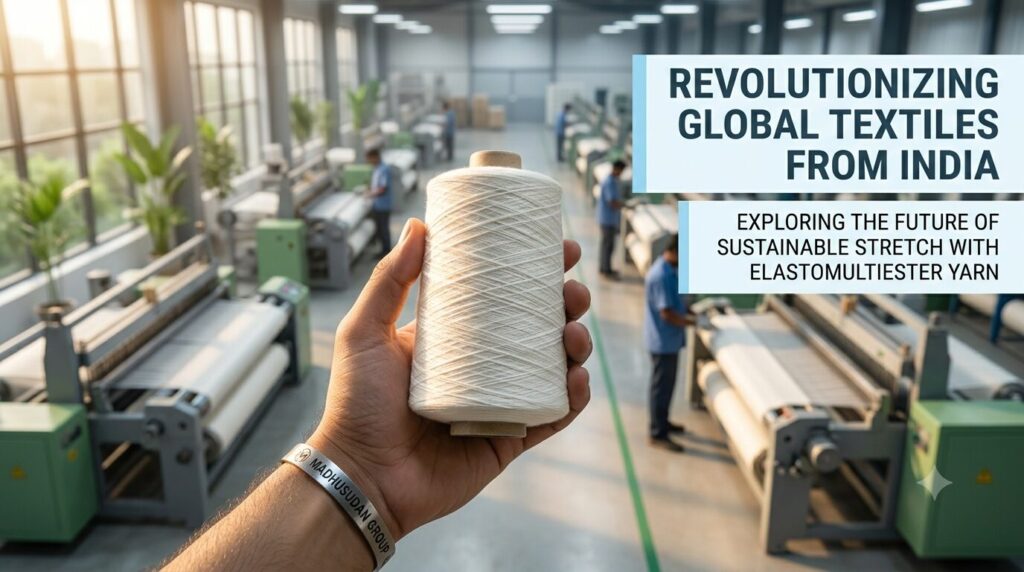
Asia has long been the engine room of global textile manufacturing, and today it is also becoming the testing ground for one of the industry’s most significant shifts: the move toward mechanical stretch technology. As brands and buyers search for alternatives to traditional elastane-based stretch, bicomponent yarn and elastomultiester fibers are emerging as reliable, durable, and increasingly sustainable solutions across the region’s spinning and weaving mills.
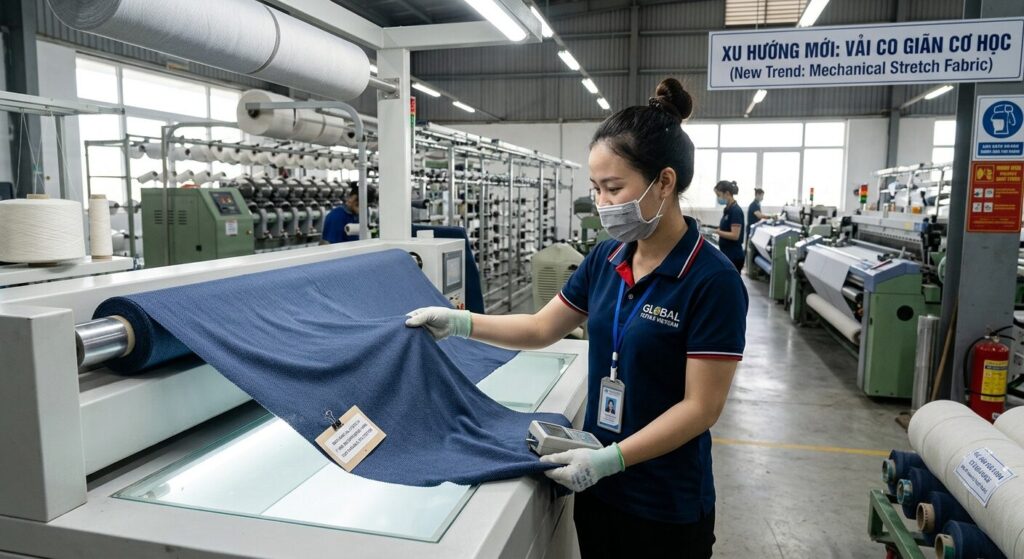
For decades, stretch fabric meant one thing spandex or Lycra blended into cotton, polyester, or nylon yarns. That approach works, but it comes with known limitations: heat sensitivity, chlorine degradation, and end-of-life recycling challenges. Bicomponent yarn, particularly elastomultiester constructions, offers a mechanical alternative that achieves comparable stretch and recovery without relying on elastane at all. This shift matters enormously in Asia, where the sheer scale of production means even small material innovations ripple across millions of meters of fabric annually.
Asia’s Position in Global Textile Manufacturing
Asia remains the backbone of the world’s apparel and technical textile supply chain, with countries such as India, China, Bangladesh, Vietnam, and Pakistan collectively producing the majority of the world’s woven and knitted fabrics. India in particular has built deep expertise in yarn spinning, denim manufacturing, and technical textile innovation, supported by strong raw material access, skilled labor, and government-backed textile parks and export incentives.
This manufacturing base gives the region a natural advantage when it comes to adopting new fiber technologies like bicomponent yarn. Mills already equipped for high-volume spinning and weaving can integrate elastomultiester yarns into existing production lines with comparatively modest retooling, which is one reason adoption has accelerated faster in Asia than in some other regions.
Why Bicomponent Yarn and Elastomultiester Are Gaining Ground
Bicomponent yarn is engineered by combining two polymer components typically with different shrinkage or crimp characteristics within a single filament. When woven or knitted into fabric and finished correctly, this structure creates a coiled, spring-like effect at the fiber level, producing stretch and recovery mechanically rather than chemically.
How Mechanical Stretch Differs from Elastane-Based Stretch
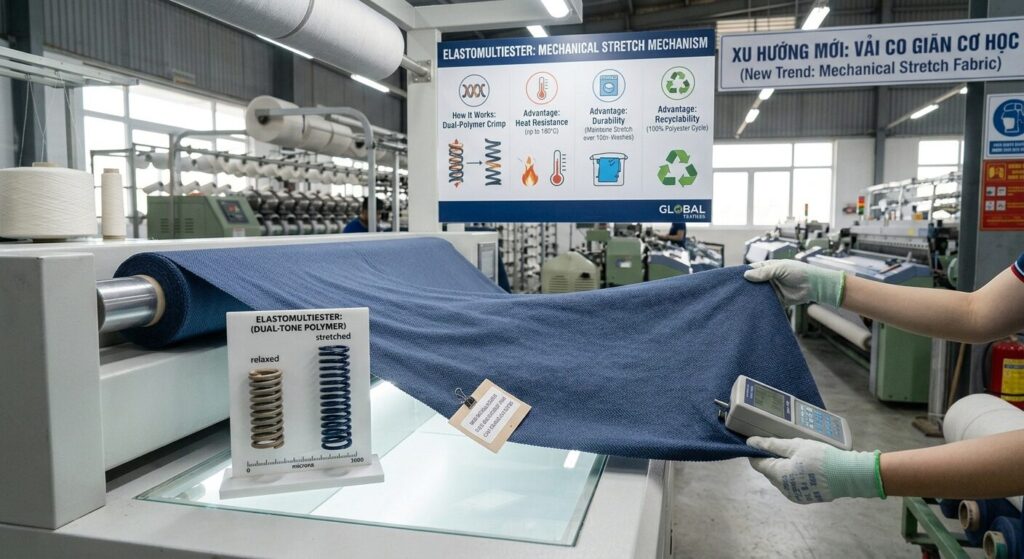
Traditional stretch fabrics rely on a small percentage of elastane fiber blended with the base yarn. Mechanical stretch fabrics, by contrast, achieve elasticity through the yarn’s own structure. This distinction matters for several practical reasons:
- Heat resistance: Elastomultiester fabrics tolerate higher processing and finishing temperatures without degrading.
- Durability: Mechanical stretch yarns generally hold their recovery properties over more wash cycles.
- Recyclability: Because elastomultiester is polyester-based rather than a polyester-elastane blend, it is easier to recycle using standard polyester recycling streams.
- Chemical resistance: These yarns are less prone to degradation from chlorine, detergents, and UV exposure compared to elastane blends.
Sustainability Advantages of Elastomultiester
Sustainability commitments from global apparel brands are pushing mills across Asia to reconsider fiber choices. Elastomultiester yarns support mono-material fabric construction, which simplifies recycling and aligns with extended producer responsibility frameworks being discussed in major export markets. For Asian manufacturers targeting European and North American buyers, this compatibility with circular textile goals is becoming a genuine commercial advantage rather than a niche consideration.
Key Fabric Categories Shaping Asia’s Stretch Market
Denim and Casualwear
Asia, and India specifically, remains one of the largest denim manufacturing hubs in the world. Mechanical stretch denim using bicomponent yarn is gaining traction because it delivers the comfort stretch consumers expect without the recovery loss that plagues elastane-heavy denim after repeated washing.
Activewear and Performance Fabrics
Regional demand for performance fabrics is rising alongside growing domestic sportswear consumption in India, China, and Southeast Asia. Elastomultiester-based knits offer the four-way stretch performance brands need while improving durability under repeated stretching and moisture exposure.
Workwear and Uniforms
Industrial and institutional buyers across Asia increasingly specify stretch fabrics for workwear that must withstand frequent industrial laundering. Mechanical stretch yarns hold up better under these conditions than conventional elastane blends.
Applications Across Industries
- Automotive interior textiles requiring dimensional stability
- Medical and compression textiles
- Home textiles and upholstery fabrics needing shape retention
- Technical outdoor and travel gear
Why Global Buyers Source Stretch Yarn from Asia
International brands continue to source stretch yarn and finished fabric from Asia for several consistent reasons: established vertical supply chains from fiber to finished fabric, competitive production costs at scale, technical expertise built over decades of export-oriented manufacturing, and increasing compliance with international sustainability and labor standards. India’s textile sector in particular benefits from strong cotton and man-made fiber integration, making it well suited to blended and bicomponent yarn development.
How Madhusudan Group Supports Asia’s Stretch Yarn Market
Madhusudan Group operates within this ecosystem as a manufacturer with deep experience in yarn spinning and technical fabric development. By working with bicomponent and elastomultiester yarn technology, the group supports domestic and international buyers looking for mechanical stretch fabric options that align with evolving sustainability requirements, without compromising on the performance characteristics that denim, activewear, and workwear brands depend on. This positions Madhusudan Group as a dependable partner for buyers navigating the shift away from conventional elastane-based stretch solutions.
Future Opportunities in Asia’s Technical Textile Sector
Looking ahead, Asia’s stretch yarn segment is likely to see continued investment in recyclable and mono-material fabric systems, greater collaboration between mills and global brands on fiber innovation, and expansion of technical textile capacity beyond traditional apparel into automotive, medical, and industrial applications. Government initiatives supporting technical textile parks in India, along with rising R&D investment across the region, suggest the mechanical stretch category still has considerable room to grow.
Conclusion
Bicomponent yarn and elastomultiester technology represent a meaningful evolution in how Asia’s textile industry approaches stretch fabric production. As global buyers seek durable, recyclable, and high-performing alternatives to elastane, Asia’s manufacturing base strengthened by scale, technical expertise, and companies like Madhusudan Group is well positioned to lead this transition into the next generation of stretch textiles.
FAQ Section
1. What is bicomponent yarn used for?
Bicomponent yarn is used to create fabrics with mechanical stretch and recovery, commonly in denim, activewear, workwear, and technical textiles, without relying on elastane fiber.
2. What is elastomultiester fiber?
Elastomultiester is a polyester-based bicomponent fiber engineered to provide elastic stretch and recovery through its physical structure rather than through blended elastane.
3. Is elastomultiester more sustainable than spandex?
Elastomultiester supports mono-material polyester fabric construction, which is generally easier to recycle than polyester-elastane blends, making it a more circular-economy-friendly option in many applications.
4. Which Asian countries lead in stretch yarn manufacturing?
India, China, Pakistan, Bangladesh, and Vietnam are among the leading Asian countries in stretch yarn and technical textile manufacturing, with India known for strong vertical integration.
5. Can mechanical stretch fabric replace spandex in denim?
Yes, mechanical stretch denim using bicomponent yarn is increasingly used as an alternative to spandex-blended denim, offering comparable comfort stretch with better long-term recovery.
6. Why are global brands sourcing stretch yarn from Asia?
Global brands source from Asia due to established supply chains, cost competitiveness, manufacturing scale, and growing technical expertise in sustainable fiber innovation.
7. What industries use bicomponent stretch fabric besides apparel?
Automotive interiors, medical compression textiles, home furnishings, and outdoor technical gear all use bicomponent stretch fabric for durability and shape retention.
8. How does Madhusudan Group fit into this market?
Madhusudan Group manufactures yarn using bicomponent and elastomultiester technology, supporting buyers seeking mechanical stretch fabric solutions from an experienced Asian textile manufacturer.