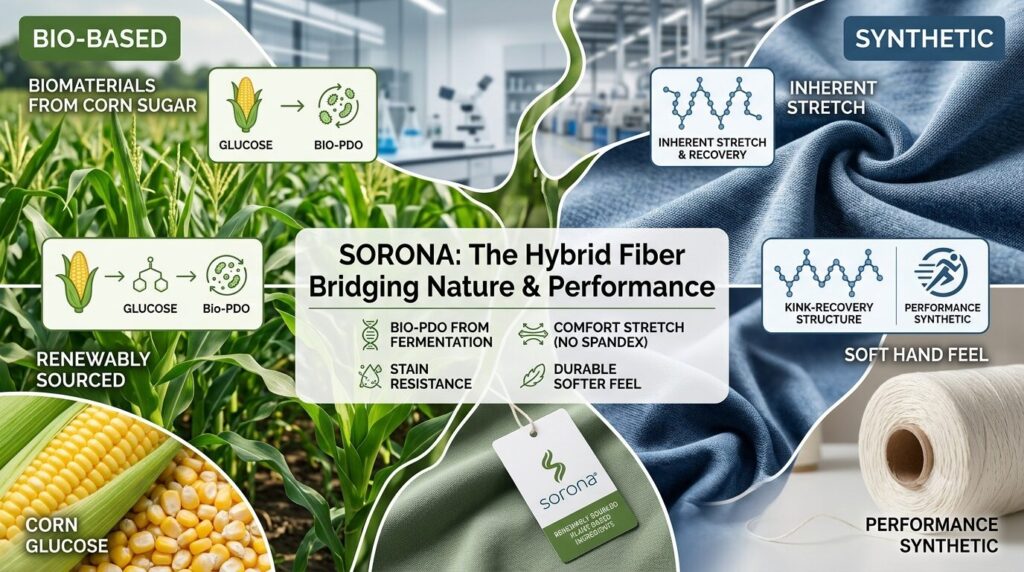
Most fibers on a garment tag are easy to place cotton grows in a field, nylon comes from petroleum, spandex is a lab creation from the 1950s. Sorona Fiber doesn’t fit neatly into either camp. It’s a synthetic fiber, but a meaningful share of its raw material comes from corn sugar instead of crude oil. That hybrid identity is why it shows up on hangtags for activewear, denim, and carpet, usually next to words like “renewably sourced” or “plant-based.”
What Sorona Fiber Actually Is
Sorona is the brand name for a polymer called PTT polytrimethylene terephthalate. Chemically, it sits in the same family as PET (regular polyester) and PBT, but the middle segment of the polymer chain is built from a compound called 1,3-propanediol, or PDO. Conventional PDO is derived from petrochemicals. The version used in Sorona, called Bio-PDO, is produced by fermenting corn glucose with a proprietary microorganism, replacing a chunk of the fossil-fuel input with an agricultural one.
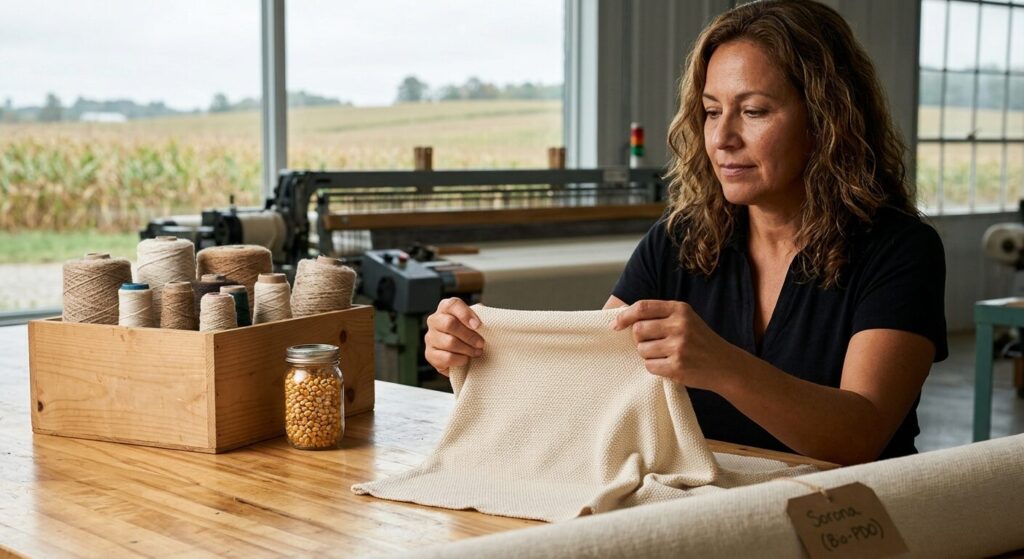
This isn’t a minor marketing tweak. The propanediol segment is what gives PTT fibers their distinctive kink-recovery behavior the molecular chain has a slight zigzag structure that acts almost like a built-in spring. That’s the source of Sorona’s stretch-and-recovery performance, and it’s a structural property of the polymer itself, not an additive or a blended-in elastic fiber.
Where the Technology Came From
DuPont developed the PTT polymer chemistry and commercialized it under the Sorona name in the early 2000s, but the Bio-PDO supply chain required a separate industrial breakthrough. In 2004, DuPont partnered with Tate & Lyle, the UK sugar and ingredients company, to build a fermentation plant capable of producing propanediol from corn instead of petroleum. That joint venture, DuPont Tate & Lyle Bio Products, opened its Loudon, Tennessee facility in 2006 and remains the primary source of Bio-PDO used in Sorona today, alongside other bio-based ingredients like Susterra and Zemea propanediol used in cosmetics and industrial fluids.
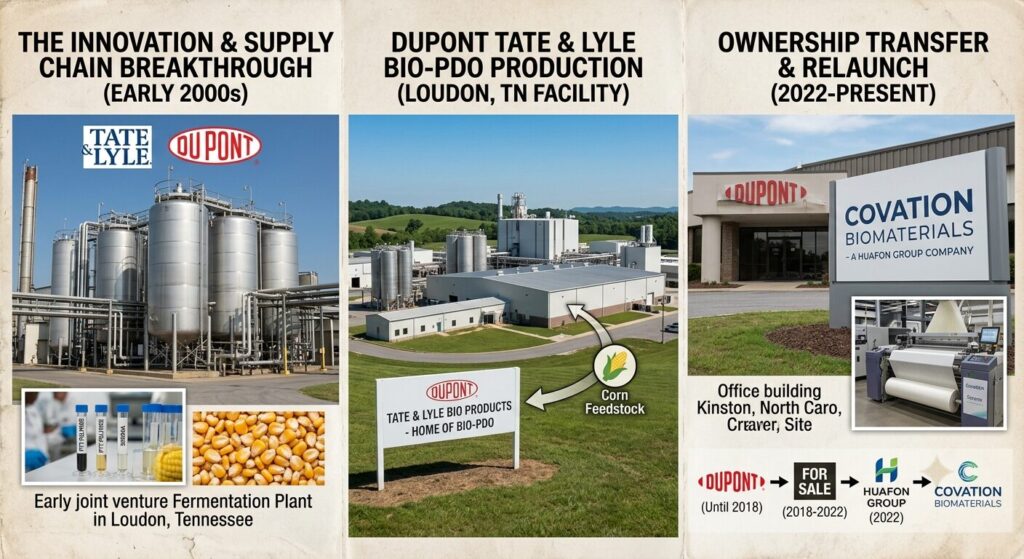
Ownership of the Sorona fiber and polymer business itself has changed more than most consumers realize. DuPont classified its biomaterials unit including Sorona as non-core and put it up for sale in 2018. After a lengthy process, the business was sold in 2022 to Huafon Group, a major Chinese spandex and chemical manufacturer, and relaunched under a new company name, Covation Biomaterials, which still operates the fiber manufacturing site in Kinston, North Carolina. The Bio-PDO joint venture with Tate & Lyle continues to supply the raw ingredient independently of who owns the finished-fiber brand.
Why Manufacturers Choose It
Three properties drive most sourcing decisions around Sorona:
Comfort stretch without added spandex. Because the polymer itself has inherent elasticity, fabric mills can build stretch into a woven or knit without core-spinning a separate elastane filament into every yarn. That simplifies production and avoids some of the durability trade-offs spandex blends carry over repeated washing.
Softness and hand feel. Sorona fiber has a lower modulus than standard polyester, which translates to a softer, more fluid drape. This is part of why it shows up frequently in performance apparel and loungewear rather than structured outerwear.
Stain and UV resistance. The fiber resists staining without needing a separate chemical treatment, and it holds color and shape under sun exposure better than some competing synthetics a property that made it attractive to the carpet industry well before apparel brands picked it up.
Sorona Fiber in Carpet: The Original Commercial Win
Before Sorona became known in fashion circles, its biggest commercial success was residential carpet. Mohawk Industries has manufactured SmartStrand carpet using Sorona polymer since the mid-2000s, marketing it around permanent stain resistance and a softer underfoot feel than conventional nylon carpet fiber. This carpet application is still one of the largest volume uses of the polymer, even as apparel use has expanded.

Sorona vs. Standard Polyester and Nylon
The comparison manufacturers care about most is against virgin polyester and nylon 6, since Sorona competes directly with both in apparel bids.
Against standard polyester, Sorona offers noticeably better inherent stretch and a softer hand, at a similar or slightly higher cost per pound depending on the Bio-PDO content ratio, which has historically run around 37–40% plant-based by weight, with the remainder coming from petrochemical-derived terephthalic acid.
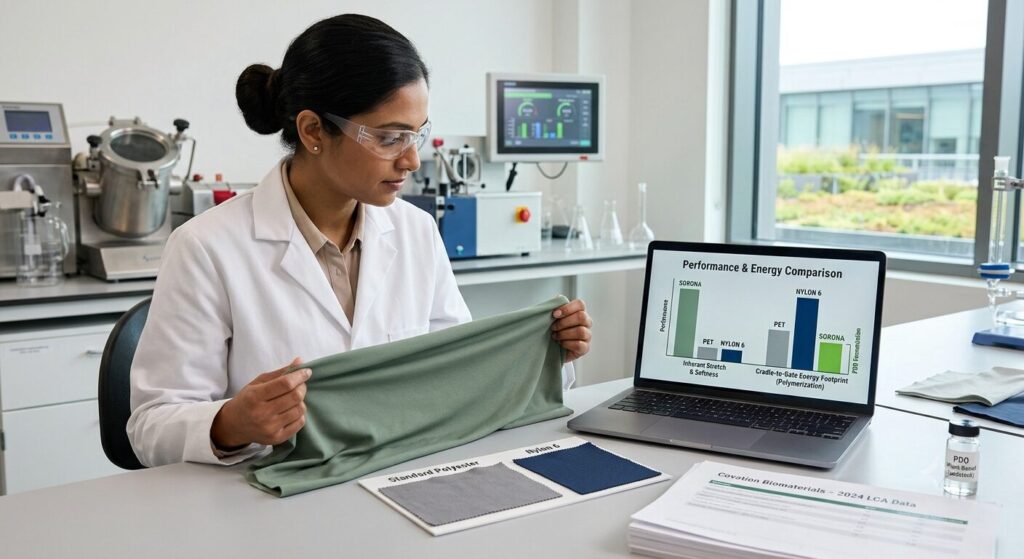
Against nylon 6, Sorona’s manufacturer has claimed a lower cradle-to-gate energy footprint during polymerization, since PDO fermentation requires less processing energy than nylon’s high-pressure, high-temperature polymerization route. Independent life-cycle assessments vary in their exact figures, and buyers evaluating sustainability claims for compliance or reporting purposes should request current third-party verified data from Covation Biomaterials rather than relying on older DuPont-era figures, since the ownership change may have affected production processes and certifications.
Common Applications
- Activewear and athleisure, where inherent stretch reduces reliance on spandex blends that degrade with heat and chlorine exposure
- Denim, blended with cotton for comfort stretch that resists the “bagging out” some spandex-blend jeans develop
- Outerwear linings and insulation, taking advantage of softness and moisture management
- Residential carpet, primarily under the SmartStrand brand
- Automotive interior fabrics and home furnishings, a smaller but growing category
Care Considerations
Sorona-blend garments generally tolerate machine washing and moderate heat drying better than spandex-heavy fabrics, since there’s no separate elastane filament to break down from repeated heat cycling. That said, care instructions depend heavily on what Sorona is blended with a Sorona-cotton denim blend should follow cotton-appropriate care, while a Sorona-nylon activewear piece should follow synthetic-fabric guidelines. Always defer to the garment’s care label over generic fiber assumptions.
Buying and Sourcing Notes
For brands and mills sourcing Sorona-based yarns or fabrics today, the key contact point is Covation Biomaterials rather than DuPont directly, since DuPont exited fiber ownership in the 2022 sale. Renewable-content percentages and any third-party sustainability certifications should be confirmed directly with current suppliers rather than assumed from older marketing material, as formulations and supply chains can shift after an ownership transition of this size.
Sorona remains one of the more commercially mature bio-based synthetic fibers on the market not a niche lab material, but a polymer with two decades of industrial-scale production behind it and a supply chain that has already survived one major corporate transition.