Mestre fabric is a high-performance synthetic textile widely used in the Indian hosiery and garment manufacturing industry. Known for its excellent elasticity, smooth surface finish, and durability, Mestre has become the fabric of choice for activewear, innerwear, and casual clothing. The name ‘Mestre’ has become almost synonymous with quality stretch fabric in South Asian textile markets, especially in states like Gujarat and Maharashtra where garment production thrives.
The fabric is primarily composed of polyester-based yarn with a combination of elastomeric fibres, giving it a distinctive two-way or four-way stretch that returns to its original shape after use. This recovery property makes Mestre ideal for close-fitting garments that must maintain their shape through repeated washing and wearing cycles.
Key Properties of Mestre Fabric
One of the primary reasons Mestre fabric has become so popular among garment manufacturers in India is its broad range of physical properties. The fabric is lightweight, breathable, and moisture-wicking, making it suitable for both warm and cool weather conditions. Its smooth texture ensures minimal friction against the skin, a property highly valued in innerwear and sportswear.
Mestre also demonstrates excellent colour retention, meaning garments retain their vibrancy even after extended exposure to sunlight and multiple wash cycles. This makes it particularly attractive to fashion brands that require consistent product quality throughout a garment’s lifecycle.
The tensile strength of Mestre fabric is another major selling point. Manufacturers appreciate that the material does not easily tear or fray during high-stress operations such as cutting, sewing, and finishing. This reduces fabric wastage on the production floor and improves overall cost efficiency.
Applications of Mestre Fabric in the Garment Industry
Mestre fabric finds application across several categories of clothing. In the activewear segment, it is used for cycling shorts, yoga pants, gym tops, and compression garments. Its four-way stretch capability allows complete freedom of movement without compromising structural integrity.
In the innerwear category, Mestre is used for manufacturing briefs, bralettes, and thermal underlayers. The soft touch and skin-friendly composition ensure comfort during all-day wear. Brands offering economy and mid-tier innerwear rely heavily on Mestre because it delivers premium feel at a competitive price point.
Swimwear and beachwear manufacturers also turn to Mestre for its excellent chlorine and UV resistance. The fabric does not degrade quickly when exposed to pool water or ocean salt, extending product life significantly compared to cheaper alternatives.
How Mestre Fabric Is Manufactured
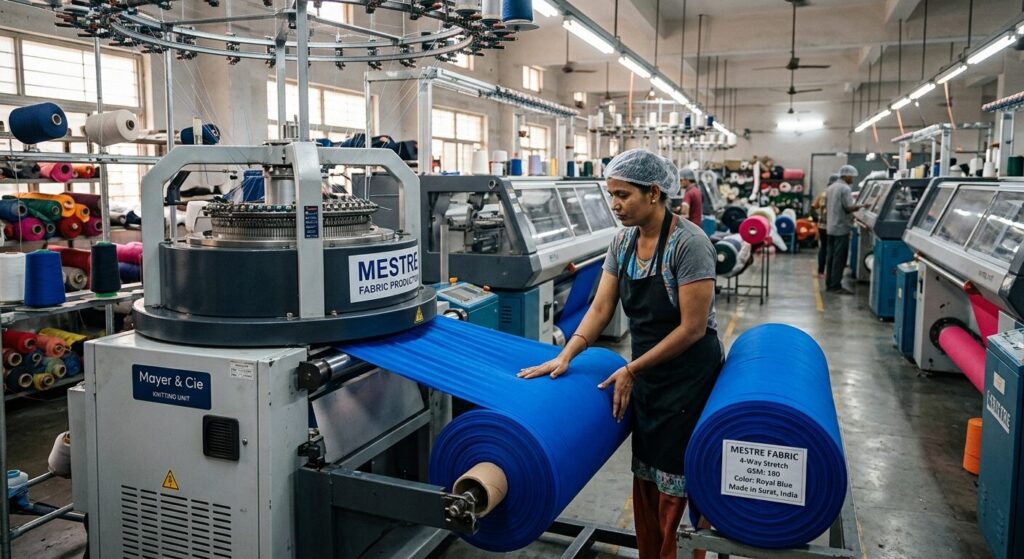
The manufacturing process of Mestre fabric involves knitting polyester yarn with elastomeric fibres on circular knitting machines. The knitting structure, whether single-jersey, rib, or interlock, determines the final weight, stretch level, and surface texture of the fabric. After knitting, the fabric undergoes dyeing in jet dyeing machines, followed by finishing processes that include heat-setting to stabilise stretch properties and calendering for surface smoothness.
Quality control is a critical step in Mestre production. Reputable manufacturers test GSM (grams per square metre), stretch percentage, colourfastness, and shrinkage before releasing fabric for garment production.
Mestre vs. Other Stretch Fabrics
When compared to fabrics like viscose, cotton spandex blends, or plain polyester, Mestre holds a distinct advantage in terms of durability and elasticity. Cotton spandex blends, while soft, lack the long-term stretch recovery of Mestre. Viscose-based stretch fabrics are prone to shrinkage and colour fading, whereas Mestre maintains its dimensions and colour more reliably.
Plain polyester fabrics, though cost-effective, do not offer the same elasticity as Mestre. For performance garments where stretch and recovery are non-negotiable, Mestre remains the superior choice.
Sustainability in Mestre Fabric Production
Environmental considerations have become increasingly important in textile manufacturing. Several Mestre producers in India are now adopting recycled polyester yarn as a base input, reducing dependency on virgin petroleum-derived fibres. The use of azo-free dyes and waterless dyeing technologies is also being explored to minimise environmental impact. Brands looking to align with sustainability goals can work with certified Mestre suppliers who adhere to OEKO-TEX and GRS standards.
Buying Mestre Fabric in India
Mestre fabric is widely available through textile markets in Surat, Ahmedabad, and Mumbai. Wholesale suppliers typically offer the fabric in rolls of 40–100 metres, with customisation options for weight, colour, and finish. Minimum order quantities vary by supplier, but small-scale garment manufacturers can often source sample quantities for trial production runs.
Online B2B platforms have also made it easier to source Mestre fabric from verified suppliers across India. When purchasing, buyers should request test reports for stretch, shrinkage, and colourfastness to ensure quality consistency.