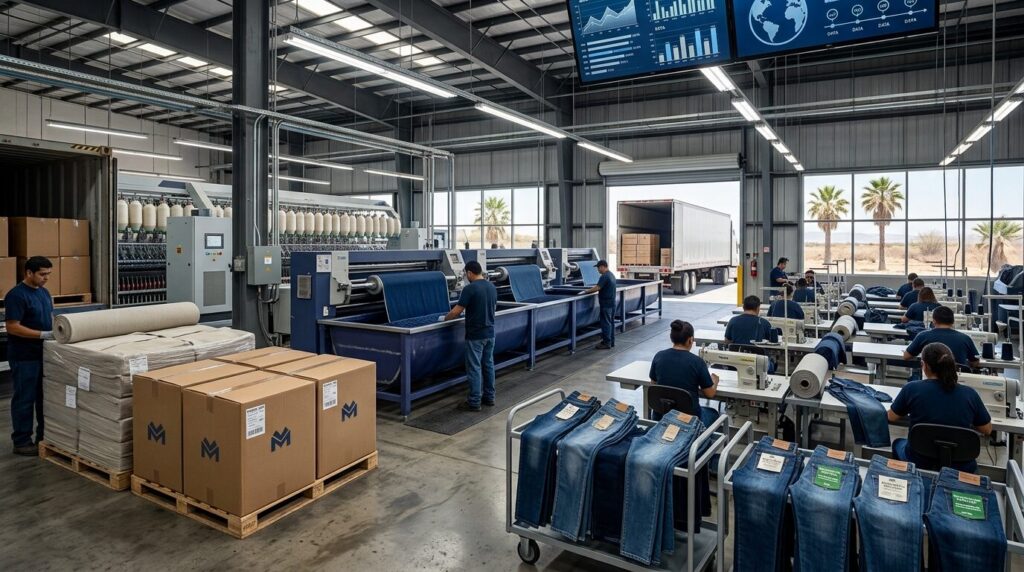
North America’s denim and apparel industry has long depended on elastane-blended stretch fabric, but a combination of nearshoring trends, USMCA trade dynamics, and sustainability pressure is opening the door to mechanical stretch alternatives such as bicomponent yarn and elastomultiester, including specialty constructions like elasterell-p, which have quietly supported stretch denim in the US market for years.
North America’s Position in Global Textile Manufacturing
The US, Mexico, and Canada operate as an integrated textile and apparel trade bloc under USMCA, with Mexico and parts of Central America serving as key cut-and-sew and denim finishing hubs supplying US retailers, while raw yarn and greige fabric are frequently imported from Asia. The US retains strong denim finishing, dyeing, and technical textile capability, particularly in states with legacy textile industries, while Canada’s smaller manufacturing base focuses more on technical and performance textiles.
Textile Industry Trends
- Nearshoring to Mexico and Central America is shortening lead times and helping brands qualify for USMCA trade benefits.
- Brand interest in recycled and mono-material stretch fabric is growing across the US apparel market.
- Denim brands are seeking alternatives to elastane after durability and recyclability concerns from consumers and retailers.
- Expanding activewear and athleisure demand continues to support growth in technical stretch fabric categories.
Key Fabric Emphasis: Elasterell-P and Elastomultiester
Elasterell-p, a bicomponent polyester yarn long used in American stretch denim, and newer elastomultiester constructions offer mechanical stretch and recovery without relying on a separate elastane filament. This gives denim mills a way to produce comfort-stretch jeans with better shape retention over the product’s life and a simpler path to end-of-life recycling.

Applications Across Industries
- Denim and casualwear: the largest single application for mechanical stretch yarn in the US market.
- Activewear and athleisure: rising domestic demand supports technical stretch fabric growth.
- Workwear and uniforms: industrial buyers value the durability of mechanical stretch under repeated laundering.
- Home textiles: shape-retentive fabrics for upholstery and furnishing applications.
Why Global Buyers Source from India
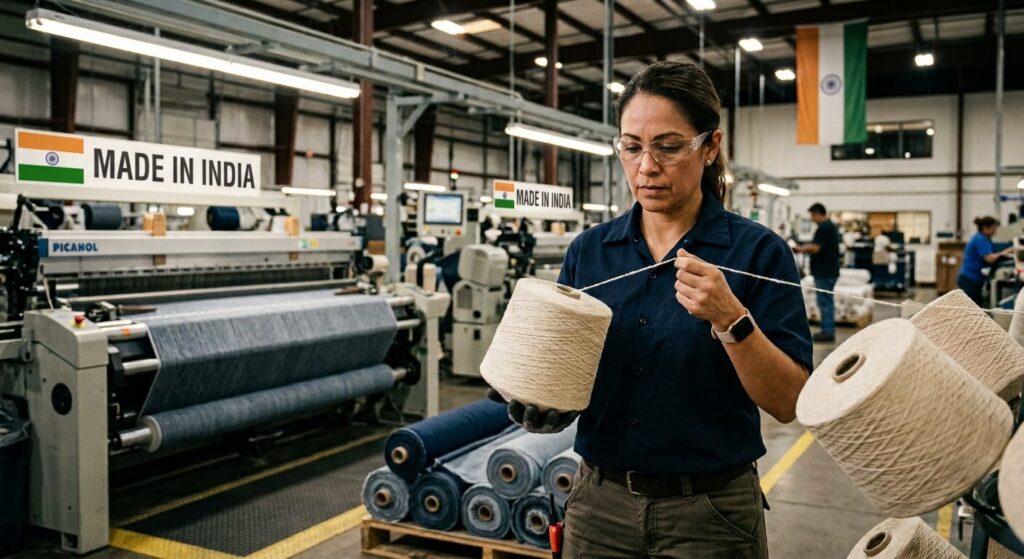
Even with nearshoring gaining ground for cut-and-sew operations, the underlying yarn supply for North American denim mills and finishers is frequently sourced from established Asian yarn producers, particularly India, which offers scale, technical spinning expertise in bicomponent constructions, and competitive pricing that complements North America’s finishing and assembly capacity.
How Madhusudan Group Supports the Market
Madhusudan Group supplies bicomponent and elastomultiester yarn suited to denim and technical fabric mills serving North American brands, supporting the shift toward mechanical stretch as a durable, recyclable alternative to conventional elastane blends.
Future Opportunities in North America’s Stretch Fabric Market
Looking ahead, continued growth of nearshored cut-and-sew paired with Asian-sourced yarn, increasing brand commitments to recyclable denim, and expansion of technical activewear demand across the US and Canada all point toward a growing role for mechanical stretch fabric in the region.
Conclusion
Bicomponent yarn and elastomultiester are steadily reshaping how North American denim and apparel brands think about stretch fabric. As nearshoring, sustainability expectations, and consumer demand for durability converge, mechanical stretch solutions supported by experienced manufacturing partners like Madhusudan Group are well positioned to serve the region’s evolving textile market.
FAQ Section
1. What is elasterell-p yarn?
Elasterell-p is a bicomponent polyester yarn engineered to provide mechanical stretch, historically used in American stretch denim as an alternative to elastane blends.
2. How does bicomponent yarn differ from spandex in jeans?
Bicomponent yarn achieves stretch through its own fiber structure rather than a separate elastane filament, often improving recovery and simplifying recycling.
3. Why is nearshoring important for North American textile sourcing?
Nearshoring to Mexico and Central America shortens lead times, reduces shipping costs, and can help brands qualify for USMCA trade benefits.
4. Does USMCA affect stretch yarn sourcing?
USMCA rules of origin influence where cutting, sewing, and finishing occur, which shapes how brands structure their North American denim and apparel supply chains.
5. Which North American countries manufacture the most denim?
Mexico and the United States are the region’s leading denim manufacturing countries, with strong finishing and cut-and-sew capability.
6. Is mechanical stretch fabric more durable than spandex denim?
Mechanical stretch fabrics generally retain recovery over more wash cycles and resist heat and chemical degradation better than elastane blends.
7. Why do US denim brands still import yarn from India?
Indian manufacturers offer scale, technical expertise in bicomponent yarn spinning, and competitive pricing that supports North American finishing operations.
8. How can I source bicomponent stretch yarn for denim production?
Denim mills and brands can source bicomponent and elastomultiester yarn through established manufacturers such as Madhusudan Group.