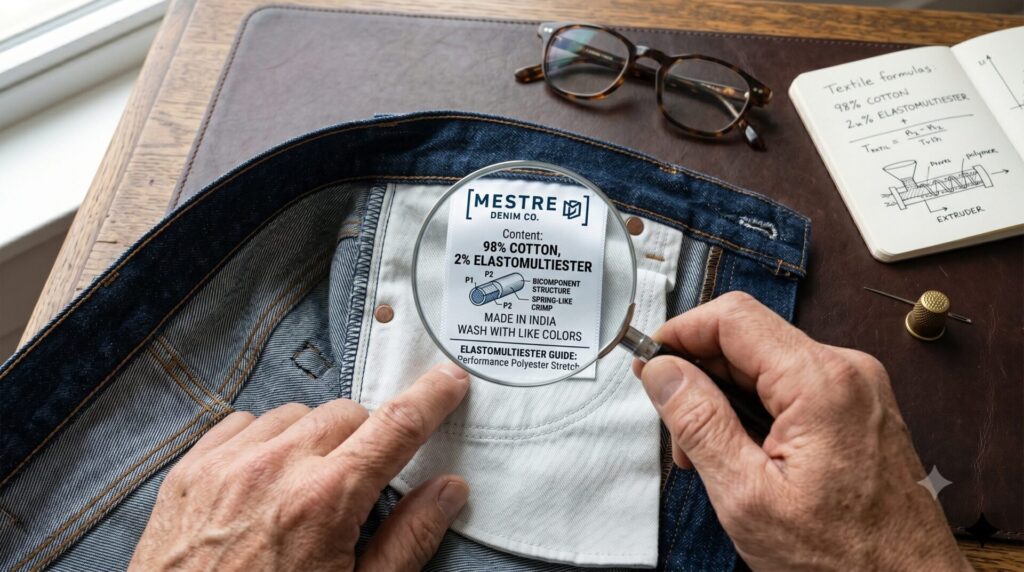
You’re reading the label on a pair of jeans or a fitted blazer and you see it: elastomultiester. It sits there between ‘polyester’ and ‘cotton’ unfamiliar, slightly intimidating, and utterly unexplained.
You’re not alone. Elastomultiester is one of the most misunderstood fiber descriptions in modern fashion, despite appearing on millions of garment labels worldwide. Is it safe? Is it good quality? How does it compare to elastane or regular polyester? And why are more brands using it in everything from denim to dress shirts?
This guide answers every question you have about elastomultiester its full meaning in English and in textile science, how it performs, how it compares to alternatives, and whether it belongs in your wardrobe.
What Is Elastomultiester? (Meaning in English & Textile)
Elastomultiester is a type of synthetic fiber made from polyester but with a crucial difference. Unlike standard polyester, elastomultiester is engineered at the fiber level to have built-in elasticity. It achieves this through a bicomponent fiber structure: two different types of polyester polymer are combined within a single fiber, arranged in a way (typically side-by-side or sheath-core) that causes the fiber to coil and crimp naturally.
This coiling structure is what gives elastomultiester its stretch. When you pull an elastomultiester fabric, those coiled fibers straighten out; when you release, they spring back. The result is genuine elastic performance without using elastane (spandex/Lycra) at all.
In English: Elastomultiester = elastic polyester = a stretchy polyester fiber that mimics elastane using only polyester chemistry.
In Textile Science: Elastomultiester is classified under the broader category of bicomponent fibers fibers made of two polymer components that work together to create a property (in this case, elasticity) that neither component alone would provide.
To understand how bicomponent fiber technology works in detail, read our guide on Bicomponent Yarn Uses and Technology at mestre.co.in.
Elastomultiester Meaning in Textile: Technical Deep Dive
Elastomultiester fibers are produced through a specialized spinning process:
- Two polyester polymers with different shrinkage rates are selected typically PET (polyethylene terephthalate) and PTT (polytrimethylene terephthalate), or similar combinations.
- They are extruded together through a single spinneret in a side-by-side or eccentric sheath-core configuration.
- Upon cooling and processing, the differential shrinkage between the two polymers causes the fiber to naturally coil and crimp creating a helical, spring-like structure.
- This crimp is permanent and is responsible for the fiber’s elastic behavior. The more the fiber is pulled, the more it wants to return to its coiled state.
This is fundamentally different from how elastane works. Elastane (spandex/Lycra) is a polyurethane polymer with extraordinary molecular elasticity it can stretch to 500-600% of its original length. Elastomultiester is more modest in its stretch (typically 20-40%), but it achieves that stretch using only polyester chemistry.
Is Elastomultiester Good? Performance Analysis
The Advantages of Elastomultiester Fabric
1. Excellent Stretch and Recovery
Elastomultiester provides meaningful stretch typically 20-40% elongation with very good elastic recovery. Fabrics made with it return reliably to their original shape after wear and washing.
2. Soft, Natural-Like Hand Feel
One of the most praised characteristics of elastomultiester is its feel. Unlike the rubbery or plastic-feeling stretch of some elastane-heavy fabrics, elastomultiester has a softer, more natural drape often compared favorably to cotton-elastane blends.
3. Excellent Durability
Polyester is inherently durable, and elastomultiester maintains this. Crucially, because the elasticity comes from the fiber’s physical structure rather than a separate elastic polymer, elastomultiester is less prone to the degradation that affects elastane over time.
4. Better Shape Retention After Washing
Elastomultiester fabrics are significantly less prone to ‘bagging out’ the phenomenon where elastane-blend fabrics lose their shape at knees, elbows, and seats after repeated washing.
5. More Sustainable Than Elastane Blends
Since elastomultiester is made entirely of polyester (without a separate elastane component), fabrics made from it are easier to recycle within existing polyester recycling streams.
The Limitations of Elastomultiester
- Less Stretch Than Elastane: Elastomultiester offers 20-40% stretch. Elastane can offer 400-600% stretch. For high-compression activewear, elastane remains superior.
- Still Synthetic: Despite its performance benefits, elastomultiester remains a synthetic polyester fiber.
- Not Widely Understood by Consumers: Many shoppers seeing ‘elastomultiester’ on a label for the first time don’t know what to make of it.
Is Elastomultiester Safe?
Safety is a completely reasonable concern when encountering an unfamiliar fiber name. The clear answer: Yes elastomultiester is safe for skin contact in normal garment use.
- Elastomultiester is made from polyester polymers with a well-documented safety record spanning decades.
- No known allergens specific to elastomultiester have been identified in peer-reviewed literature.
- People who are sensitive to elastane (polyurethane-based) may actually find elastomultiester preferable, since it contains no polyurethane component.
- Polyester fibers including bicomponent polyester variants are approved for textile use under OEKO-TEX and REACH regulations in the European Union.
Practical recommendation: If you’re sensitive to synthetics generally, look for elastomultiester garments with a higher percentage of natural fiber. If you’re sensitive specifically to elastane/spandex, elastomultiester may actually be a better-tolerated option.
Elastomultiester vs Elastane: Full Comparison
| Feature | Elastomultiester | Elastane (Spandex/Lycra) |
| Fiber Type | Bicomponent polyester | Polyurethane |
| Stretch Range | 20-40% | 400-600% |
| Recovery | Very good | Excellent |
| Durability | High (doesn’t degrade like elastane) | Degrades with heat/washing over time |
| Feel | Soft, natural drape | Rubbery in higher concentrations |
| Recyclability | Easier (pure polyester stream) | Difficult (mixed polymer) |
| Dyeability | Standard polyester dyes | Complicated by polyurethane |
| Best For | Everyday fashion, denim, workwear | Activewear, compression garments |
| Skin Safety | Safe | Safe (some with polyurethane sensitivity) |
Bottom line: For everyday fashion jeans, trousers, shirts, jackets elastomultiester is often the better choice. For high-performance compression sportswear, elastane remains the standard.
Elastomultiester vs Polyester: What’s the Difference?
| Property | Standard Polyester | Elastomultiester |
| Stretch | 3-5% | 20-40% |
| Recovery | Poor | Very Good |
| Softness | Variable (often stiffer) | Generally softer |
| Comfort in motion | Limited | High |
| Price | Lower | Higher (specialized production) |
For a full discussion of mechanical stretch another way to add stretch to polyester fabrics visit our article on Mechanical Stretch Meaning and Examples at mestre.co.in.
Elastomultiester vs Cotton: Is It Worth the Switch?
| Property | Cotton | Elastomultiester |
| Breathability | Excellent | Moderate |
| Stretch | Minimal (5-8%) | 20-40% |
| Shape Retention | Poor (especially at knees/elbows) | Excellent |
| Moisture Management | Absorbs moisture | Wicks moisture |
| Biodegradability | Yes | No |
| Durability | Moderate | High |
Choose cotton if breathability, natural feel, and biodegradability are your top priorities especially for warmer climates like India. Choose elastomultiester (or cotton-elastomultiester blends) when you need shape retention, stretch performance, and durability particularly for fitted garments and workwear.
Elastomultiester Jeans: Everything You Need to Know
Denim is one of the most demanding applications for any stretch fiber. Jeans need to maintain their shape after hours of wear, recover after sitting and squatting, look structured and woven, and survive repeated washing. Elastomultiester jeans deliver on all these fronts.
Why Elastomultiester Works So Well in Denim
Shape Retention: Traditional elastane-denim blends are notorious for ‘bagging out’ especially at the knees and seat. Elastomultiester’s superior recovery means jeans hold their shape significantly better through a full day of wear.
Durability: Elastane degrades faster than polyester when exposed to heat and alkaline detergents. Elastomultiester maintains its elastic performance through far more wash cycles.
Natural Denim Aesthetic: Elastomultiester blends seamlessly with the cotton in denim visually and texturally while adding subtle stretch. The fabric looks and feels like premium woven denim, not a stretch synthetic.
Sustainable Credentials: As denim brands face growing pressure to improve recyclability, switching from cotton-polyester-elastane blends to cotton-elastomultiester simplifies the recycling pathway.
What to Look for in Elastomultiester Jeans
- Fiber content: Look for compositions like 98% cotton + 2% elastomultiester. A small percentage (2-5%) delivers meaningful stretch without overwhelming the natural cotton character.
- Weight: 11-13 oz denim with elastomultiester feels premium and substantial while offering comfort flex.
- Finishing: Stonewashed or enzyme-washed denim with elastomultiester holds up better to finishing processes than elastane equivalents.
Frequently Asked Questions (FAQ)
Q1: What does elastomultiester mean in English?
Elastomultiester means ‘elastic polyester’ it’s a bicomponent polyester fiber engineered to have stretch and recovery properties without using elastane (spandex/Lycra). The ‘multi’ refers to the multiple polymer components within a single fiber.
Q2: Is elastomultiester fabric safe to wear?
Yes. Elastomultiester is made from polyester polymers with a well-established safety record. It contains no polyurethane, no known allergens, and is compliant with major textile safety standards.
Q3: Is elastomultiester better than elastane?
For everyday fashion and durability, elastomultiester is often better it lasts longer, dyes more consistently, and is easier to recycle. For high-compression sportswear, elastane still leads.
Q4: What is the difference between elastomultiester and polyester?
Both are polyester-based, but standard polyester has minimal stretch (3-5%), while elastomultiester has built-in stretch (20-40%) due to its bicomponent fiber structure.
Q5: Is elastomultiester good for jeans?
Yes elastomultiester is excellent for jeans. It provides comfortable stretch, superior shape retention vs elastane, and longer-lasting performance through repeated washing.
Q6: Is elastomultiester sustainable?
Compared to elastane blends, elastomultiester is more sustainable being made purely from polyester, it fits more easily into polyester recycling streams.
Q7: How does elastomultiester compare to cotton?
Cotton is more breathable and biodegradable; elastomultiester offers better stretch, durability, and shape retention. Many premium garments use a blend of both.
Conclusion
Whether you’ve seen ‘elastomultiester’ on a jean label or in a supplier’s product sheet, you now know exactly what you’re dealing with: a sophisticated bicomponent polyester fiber that delivers genuine stretch, excellent durability, and better sustainability credentials than traditional elastane blends. It’s a genuine advancement in fiber technology reshaping how leading brands approach stretch in denim, trousers, shirting, and suiting.
Want to learn more about the fiber technologies shaping modern fashion? Explore our complete guides at mestre.co.in.